
Oriental spruce
Picea orientalis (L.) Link
Description
Growing requirements
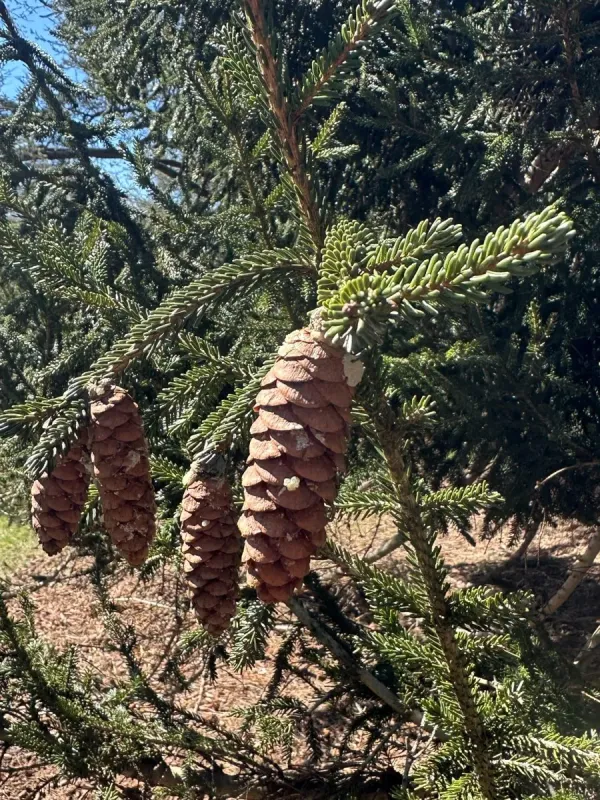
Oriental spruce (Picea orientalis) is a significant conifer species belonging to the Pinaceae family. It is renowned for its slender, conical growth habit and dense, dark green needles that possess a distinctive glossy finish.
The native distribution of this species is confined to the Caucasus Mountains and Northeast Turkey. It thrives in high-altitude environments characterized by cool temperatures and high atmospheric humidity, forming dense forest ecosystems.
Regarding soil requirements, this species favors deep, fertile, and slightly acidic soils. Good drainage is essential, as the roots are sensitive to waterlogging and soil compaction, which can severely hinder the long-term vitality of the tree.
Climatic adaptability is notable, as the tree is exceptionally shade-tolerant and hardy in temperate conditions. However, young specimens require protection from harsh desiccating winds and excessive direct sun during the early stages of establishment.
Economically, the Oriental spruce is valued for its high-quality timber used in construction and cabinetry. Additionally, it remains a premier choice for landscaping, valued for its slow growth rate, elegant appearance, and ability to remain dense over time.
Main diseases and pests
Pathological issues such as needle cast diseases are common, causing foliage discoloration and premature needle drop. These fungi typically thrive in regions with poor air circulation and excessive moisture on the needles.
Common insect pests include the spruce spider mite and various types of aphids, which can cause severe chlorosis. In mature forests, bark beetles represent the most significant threat, necessitating proactive monitoring and removal of affected trees.