
Jezo spruce
Picea jezoensis (Siebold & Zucc.) Carrière
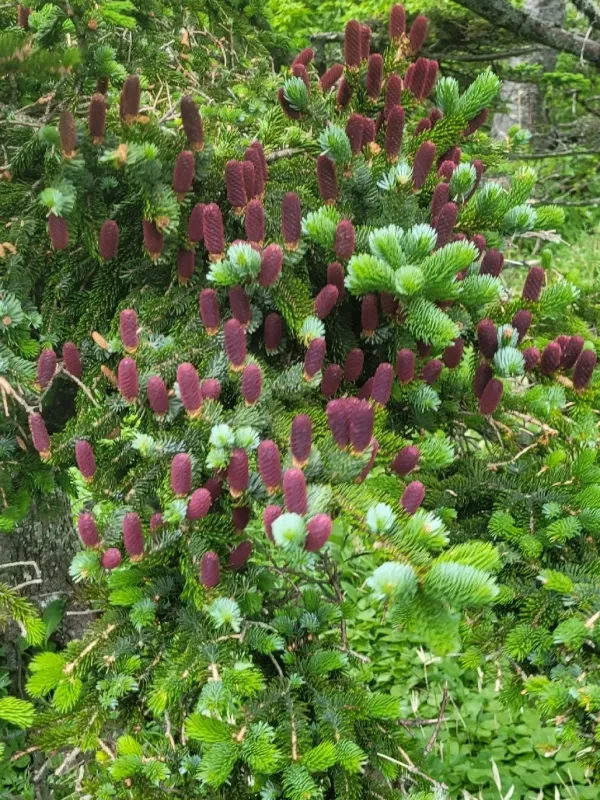
Description
Growing requirements
The Jezo spruce (Picea jezoensis) is a significant species belonging to the Pinaceae family. It is an evergreen conifer known for its majestic growth, often reaching substantial heights in its natural mountain habitats across East Asia and the Russian Far East.
Native to cool, humid regions, the species thrives in areas with consistent moisture and misty conditions. It is frequently found in high-altitude environments where it forms dense forests, often growing in association with other conifer species that prefer similar ecological niches.
In terms of soil requirements, the tree prefers deep, fertile, and well-drained loamy soils. It has a relatively shallow root system, making it susceptible to windthrow and necessitating sites that offer protection from high-velocity winds and mechanical disturbance.
One of the key biological characteristics of Picea jezoensis is its extreme shade tolerance. This trait allows seedlings to establish themselves under the dense forest canopy, growing slowly before eventually reaching the sub-canopy and upper forest tiers.
Cultivation requires careful planning regarding site selection. In plantation forestry, ensuring adequate atmospheric humidity is as critical as soil moisture management. During the early years, the species demands protection from excessive heat and direct sunlight to maintain optimal transpiration rates.
Yield
The economic value of the Jezo spruce is high due to the quality of its timber. The wood is lightweight, strong, and possesses uniform texture, making it highly suitable for structural construction, high-quality furniture, and the production of paper pulp.
Beyond timber production, the tree serves a vital role in ornamental horticulture. Its unique needle coloration, featuring glossy dark green on the upper surface and silvery-white bands beneath, provides high aesthetic value for landscape planning and forest conservation projects.
Main diseases and pests
The species faces various threats from insect pests, particularly aphids and spruce budworms, which can cause significant needle drop and reduce overall tree vigor. Integrated pest management strategies are essential for maintaining the health of forest stands.
Fungal pathogens, such as needle cast diseases, often proliferate in poorly ventilated stands or areas with excessive rainfall. Maintaining adequate tree spacing and implementing sanitary thinning practices help to reduce the incidence and spread of these destructive forest diseases.