
Koyama spruce
Picea koyamae Shiras.
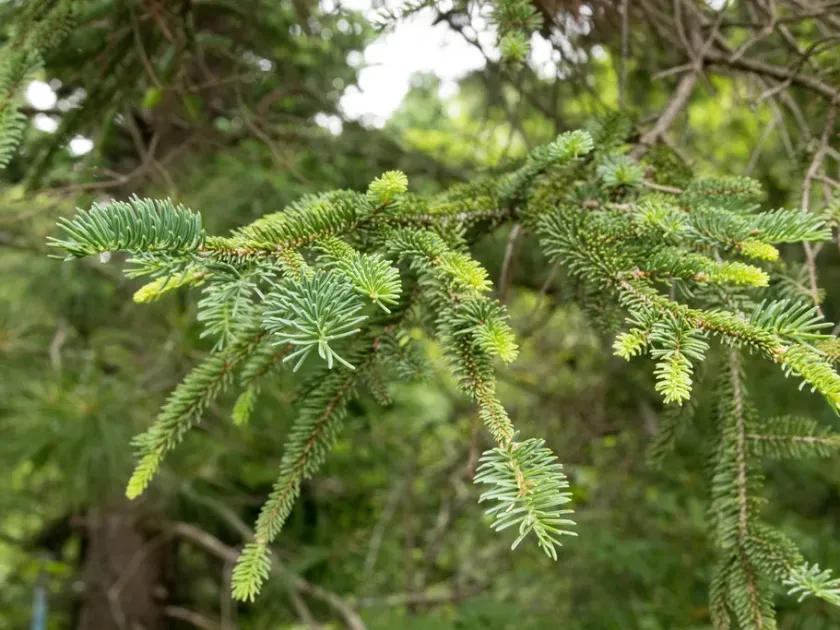
Description
Growing requirements
The Koyama spruce (Picea koyamae) is a member of the Pinaceae family, native to the high mountain ranges of Honshu, Japan, where it grows in cool, alpine environments.
Botanically, it is distinguished by its dense, conical shape and short, stiff needles, which provide a compact and attractive appearance suitable for specialized forestry projects.
This species requires well-drained, acidic to neutral soil that remains moist throughout the growing season but does not become waterlogged, which can be detrimental to root development.
It thrives in cool climates with high atmospheric humidity, making it challenging to cultivate in regions with hot, dry summers or urban pollution.
Proper maintenance involves ensuring adequate space for root expansion and selecting a site that offers shelter from harsh, desiccating winter winds.
Main diseases and pests
The Koyama spruce is susceptible to various fungal pathogens, with needle cast being the most common issue in plantations with poor air circulation.
Insects such as spruce aphids and spider mites frequently target the needles, potentially causing significant defoliation if left untreated during the peak growing season.
Root rot, primarily caused by Phytophthora species, remains a persistent threat in soils where drainage is insufficient or irrigation management is poor.
Bark beetles can pose a risk to mature trees, especially those under stress from drought or nutrient deficiencies, necessitating vigilant orchard or forest monitoring.
Control strategies should focus on an integrated pest management (IPM) approach, combining organic pest deterrents with chemical fungicides only when strictly necessary.