
Cyrtopodium andersonii
Cyrtopodium andersonii
Description
Growing requirements
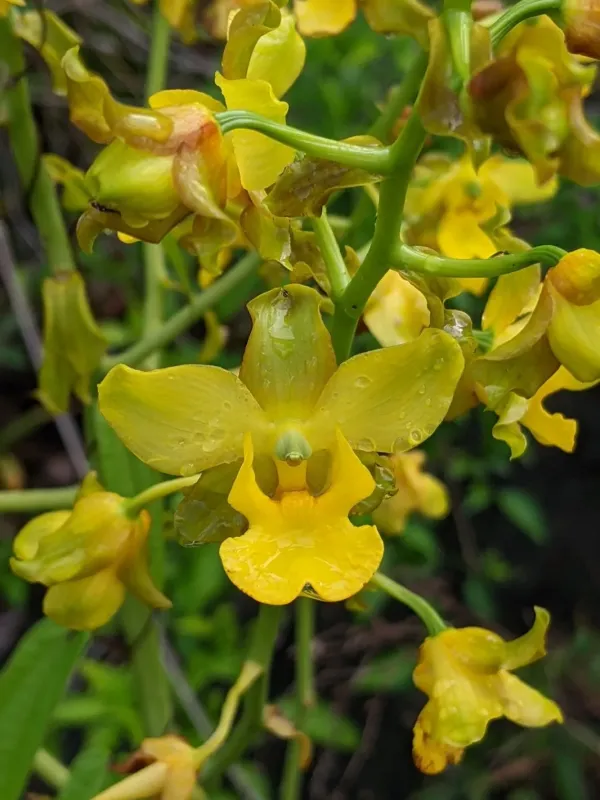
Cyrtopodium andersonii is a striking species of orchid belonging to the Orchidaceae family, noted for its robust, pseudobulb-forming structure. This plant is highly valued by enthusiasts for its unique appearance and tall, vibrant flower spikes that can reach significant heights.
Originating from the tropical regions of South America, this species is naturally adapted to environments that range from open rocky outcrops to humid forest fringes. Understanding this origin is key to replicating its required microclimate in a domestic or nursery setting.
When it comes to light requirements, Cyrtopodium andersonii thrives in bright, indirect light. While it enjoys high light intensity to support its vigorous growth, it must be protected from harsh, direct afternoon sun, which can cause leaf scorch and damage the delicate pseudobulbs.
The potting medium must prioritize drainage above all else. A specialized orchid mix consisting of coarse bark, perlite, and charcoal is ideal for preventing water stagnation. The roots require excellent aeration, so using breathable pots is a recommended horticultural practice.
Temperature management is crucial throughout the year. The plant requires a warm, growing season with temperatures consistently above 20 degrees Celsius. However, a cooling period during the winter months, combined with reduced watering, is essential to trigger the next blooming cycle.
Main diseases and pests
Root rot is the most common threat to the vitality of Cyrtopodium andersonii. It is usually triggered by poor drainage or overwatering, especially during periods of low activity. Once the roots are compromised, the plant struggles to recover, making prevention through strict watering discipline essential.
Mealybugs and scale insects represent the most persistent pests for this orchid. These insects often aggregate in protected areas such as the base of the pseudobulbs, making them difficult to detect. Regular inspection and the application of horticultural oils or systemic insecticides are effective control measures.
Fungal infections, such as leaf spot, are common in environments with high humidity and stagnant air. These conditions promote the rapid spread of spores. To mitigate this, growers should ensure consistent air circulation around the plants and avoid misting the foliage late in the day.
Spider mites can become a nuisance if the surrounding air is kept too dry for an extended period. These pests extract fluids from the leaves, causing silvering and tissue decline. Keeping the humidity levels stable and occasionally wiping the foliage helps to deter their presence.
Viral diseases, while less frequent than pests, can occur and are often transmitted through non-sterile cutting tools. To prevent the spread of these pathogens, all tools used for pruning or dividing the plant must be thoroughly disinfected with isopropyl alcohol before and after each use.