
Cyrtopodium eugenii
Cyrtopodium eugenii
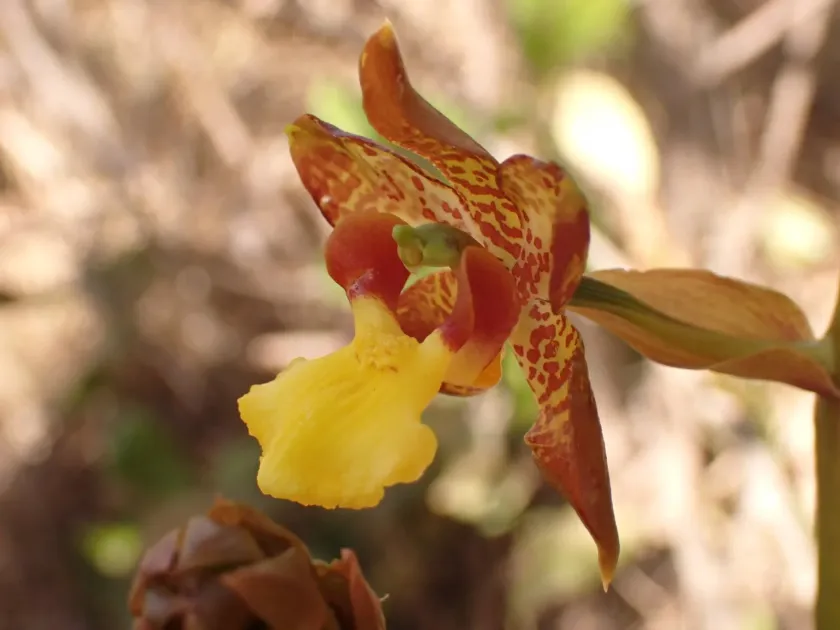
Description
Growing requirements
Cyrtopodium eugenii is a fascinating species within the Orchidaceae family, native to the tropical landscapes of Brazil. It is primarily known for its architectural form, characterized by large, robust pseudobulbs that store energy for growth and flowering phases.
Botanically, this plant acts as an epiphyte, adapted to living in high-canopy environments or rocky outcrops. Its thick, lanceolate leaves are designed to withstand fluctuations in environmental moisture, reflecting the seasonal nature of its natural habitat.
Regarding light requirements, Cyrtopodium eugenii thrives in bright, filtered light. While it loves sunshine, direct exposure to intense afternoon rays can lead to leaf scorching, so providing a shade cloth or filtered window location is essential for healthy development.
The potting medium must be exceptionally well-draining, as the roots are highly susceptible to rot. A mixture of coarse bark, charcoal, and perlite provides the necessary airflow for healthy root systems, which is vital for the long-term vitality of the plant.
Temperature management is another critical aspect. The species appreciates a warm climate with a significant drop in temperature during the night, which mimics the natural conditions of its native range and helps trigger the onset of the flowering cycle.
Main diseases and pests
Pests are a common challenge in the maintenance of Cyrtopodium eugenii, with mealybugs being one of the most frequent visitors. These small, cotton-like pests hide in tight crevices and can rapidly spread across the pseudobulbs if left unmanaged.
Scale insects can also infest the plant, causing yellowing of the leaves and stunted growth. Regular inspection of the plant architecture is recommended, as these pests are often well-camouflaged against the textured surface of the mature pseudobulbs.
Fungal rots, particularly those affecting the roots, are the most common cause of death for this species in cultivation. They are triggered by stagnant water in the substrate and a lack of proper ventilation around the base of the plant.
Botrytis or grey mold may occur if the ambient humidity is high and the air remains stagnant. Increasing airflow using a small fan or opening windows can significantly reduce the risk of mold formation during cooler, damp months.
Effective pest and disease control requires a preventative approach. By maintaining a clean growing space and avoiding overcrowded conditions, the grower can significantly reduce the pressure from common orchid pathogens and parasites.