
Campylocentrum
Campylocentrum
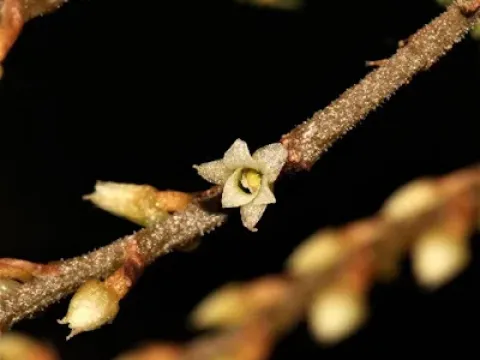
Campylocentrum is a genus of orchids belonging to the Orchidaceae family. These are primarily epiphytic plants that grow naturally on the trunks and branches of trees in the tropical forests of Central and South America.
What the section contains


Campylocentrum
Unlike most popular orchids, many species of this genus have reduced leaves or lack them entirely, making photosynthesis the task of their highly developed, flat or cylindrical roots. This morphological feature requires a specific approach to lighting in cultivation.
For successful development, the plants require high relative humidity, which should be maintained at 70–85 percent. In home conditions, they are often grown in orchidariums or on cork bark blocks, ensuring constant circulation of fresh air.
The temperature regime for members of the genus varies from moderate to warm, depending on the altitude of the specific species above sea level. Most species prefer stable temperatures without sharp fluctuations throughout the day.
Watering must be regular, as the root system of Campylocentrum, which lacks protection in the form of prominent pseudobulbs, is sensitive to prolonged drying. The substrate or block on which the plant is mounted must dry quickly to avoid root rot.
The main threats to these plants are associated with violations of the humidity regime, which provokes the development of fungal and bacterial root infections. Frequent overwatering in the absence of ventilation leads to the rapid death of the plant.
Among pests, the greatest danger is posed by scale insects and spider mites, which can attack the assimilating roots. Regular inspection of the plant allows for timely detection of pests and the implementation of measures for treatment with special insecticides.
Also, a serious enemy is moisture stagnation in the crevices or areas where roots are attached to the substrate, which leads to soft rot. It is recommended to use only high-quality, purified water for irrigation, as salts in tap water can suppress the root system.
For the prevention of diseases, it is necessary to ensure good ventilation of the room while avoiding direct drafts. The use of fungicides is permissible only in extreme cases, as plants of this genus can exhibit high sensitivity to chemicals.
Adherence to quarantine measures when purchasing new specimens helps prevent the spread of infections within the collection. Proper selection of lighting also plays an important role in maintaining the plant's immunity and its ability to resist pathogens.