
Campylocentrum micranthum
Campylocentrum micranthum
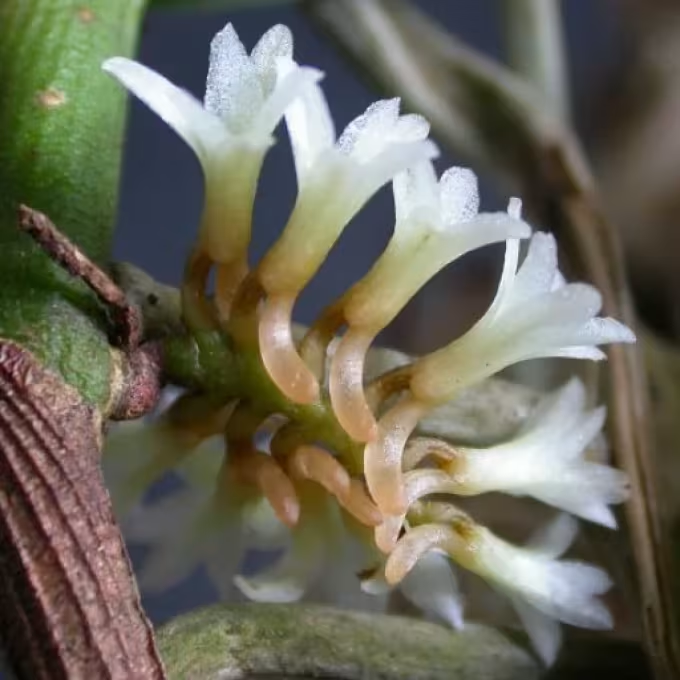
Description
Growing requirements
Campylocentrum micranthum is a unique species belonging to the Orchidaceae family, primarily recognized for its epiphytic habit. Native to the tropical regions of the Americas, this plant thrives in humid forests where it attaches to tree bark.
The botanical structure of the plant is highly specialized, consisting of a reduced stem system and numerous adventitious roots that absorb moisture and nutrients directly from the air and atmospheric precipitation.
Cultivation requires conditions that mimic tropical rainforest environments. High humidity levels, ideally exceeding 70 percent, are essential for the survival and development of this delicate orchid species.
Temperature control is critical; the plant prefers a warm climate with an optimal range between 20 and 28 degrees Celsius throughout the year, avoiding any sudden drops that could stress the metabolism.
Proper aeration is equally important. Unlike terrestrial crops, Campylocentrum micranthum needs constant air movement around its roots to prevent fungal colonization and ensure proper gas exchange for photosynthesis.
Main diseases and pests
Pest pressure in cultivation is primarily driven by spider mites and scale insects. These pests often go unnoticed until they cause significant damage to the plant's structural integrity.
Fungal diseases, especially those causing root rot, are common outcomes of improper drainage. Because the plant lacks a traditional soil medium, stagnant moisture on the roots acts as a catalyst for decay.
Virus infections, often transmitted through shared cutting tools, can significantly reduce the vitality of the plant, manifesting as necrotic spots or stunted growth patterns on the stems.
Management of these threats involves regular monitoring and the strict removal of any affected material. Early detection is key, as once the vascular system is compromised, recovery is difficult.
Integrated pest management strategies are recommended, focusing on maintaining optimal environmental parameters, which serves as the best natural defense against most agricultural threats.