
Campylocentrum pygmaeum
Campylocentrum pygmaeum
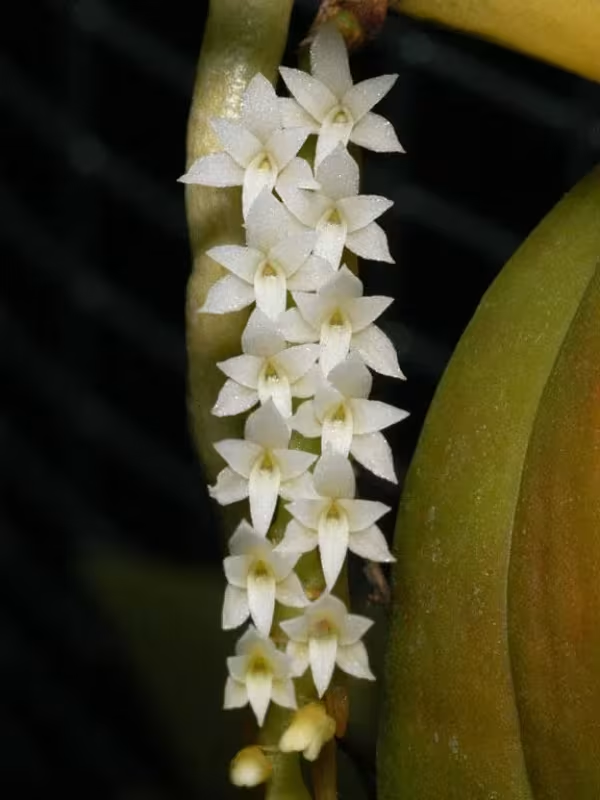
Description
Growing requirements
Campylocentrum pygmaeum is a fascinating miniature species belonging to the Orchidaceae family. It is native to the tropical regions of the Americas, where it thrives as an epiphyte, colonizing the bark of trees in humid environments.
The plant is distinguished by its highly reduced morphology. It is essentially a leafless orchid that relies on its specialized, flattened roots to perform photosynthesis and absorb moisture directly from the humid air surrounding it.
Successful cultivation requires strict adherence to high humidity levels, ideally maintained between 70% and 90%. This species is not suited for typical domestic window sills and generally demands a controlled environment like a terrarium or a closed display case.
Temperature requirements are consistent with warm tropical climates. It prefers a steady range between 20°C and 25°C. Sudden fluctuations in temperature or exposure to cold drafts should be avoided at all costs to prevent tissue damage.
The choice of medium is vital for this culture. It does not grow in standard soil but requires mounting on organic materials like cork bark or tree fern fibers. This mimicry of its natural host allows for rapid root aeration and prevents the roots from becoming waterlogged.
Main diseases and pests
Fungal infections are the most common issue, usually stemming from stagnant air and improper ventilation within the growing container. Providing gentle, continuous air movement is essential for preventing the development of pathogens.
Common pests such as spider mites and mealybugs can pose a significant danger due to the small size of the plant. Since the entire plant is delicate, these pests can quickly overwhelm the specimen, necessitating frequent and careful monitoring to ensure its survival.