
Campylocentrum fasciola
Campylocentrum fasciola
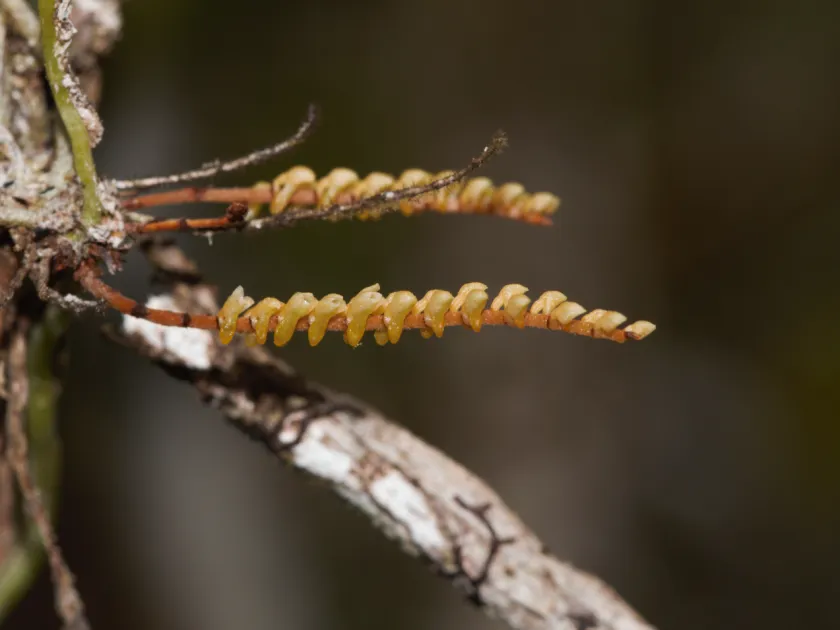
Description
Growing requirements
Campylocentrum fasciola is a fascinating species within the Orchidaceae family, noted for its leafless growth habit. The plant consists primarily of flattened, green, photosynthetic roots that function both as anchors and as the primary site for nutrient and energy production.
Native to the tropical regions of the Americas, this species thrives in humid forest environments. It is naturally found growing on the branches and trunks of host trees, where it benefits from diffuse light and consistent airflow.
Successful cultivation requires replicating a high-humidity environment, ideally maintained above 70 percent. Proper ventilation is critical to ensure that roots dry out appropriately after irrigation, preventing rot and fungal issues.
This orchid is best mounted on bark slabs or pieces of cork, which allow the roots to attach and grow freely. Using conventional potting mixes is generally discouraged as it can lead to water retention that is detrimental to this epiphyte.
Temperature requirements are moderate to warm, with a typical preference for 22-26 degrees Celsius during the day. A slight temperature drop at night is beneficial for metabolic stability and encouraging healthy, sustained growth.
Main diseases and pests
Fungal rots are the most significant threat to Campylocentrum fasciola, usually caused by stagnant air or overwatering. Once rot begins in the root mass, it can be very difficult to stop, requiring immediate intervention.
Scale insects are a primary pest concern for this species, as they can easily hide among the flattened roots. Manual removal is often necessary, supplemented by systemic insecticides safe for sensitive orchid tissues.
Low humidity levels in indoor environments can attract spider mites, which can damage the outer layer of the roots, hindering photosynthesis. Regular misting or the use of humidifiers is essential to maintain plant health.
Chemical sensitivity is a notable trait of this orchid, making it prone to fertilizer burn if concentrations are too high. It is recommended to use diluted orchid fertilizer sparingly to support physiological functions without damaging roots.
Bacterial spots, resulting from poor cultural practices, can spread quickly across the root system. Maintaining high hygiene standards and separating affected plants is crucial to prevent the total loss of the specimen.