
Campylocentrum pachyrrhizum
Campylocentrum pachyrrhizum
Description
Growing requirements
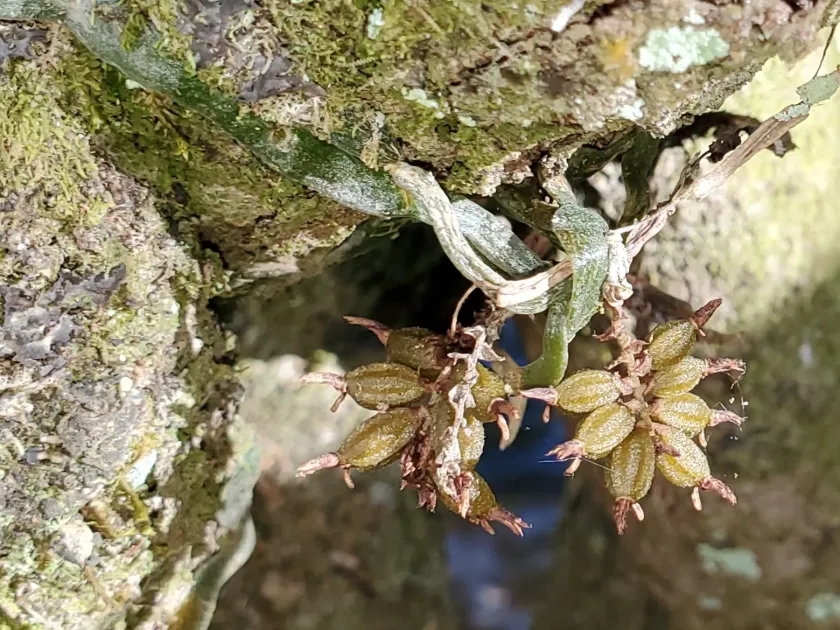
Campylocentrum pachyrrhizum is a fascinating leafless epiphyte belonging to the Orchidaceae family. Unlike conventional plants, it lacks true leaves and relies entirely on its thick, flattened roots to perform photosynthesis. This structural adaptation allows it to thrive in its natural high-humidity environment.
The species is native to the tropical forests of Central and South America. Within these regions, it typically inhabits tree branches in areas with consistent moisture and stable, warm temperatures. Successfully cultivating this plant requires an environment that mimics these specific tropical conditions.
For indoor or greenhouse cultivation, the plant should be mounted on cork or tree fern slabs rather than planted in pots. This mounting method ensures proper airflow around the roots, preventing them from becoming waterlogged, which is a common cause of failure for this particular orchid species.
The lighting requirements are strict: the plant prefers bright, filtered light. Exposure to direct sunlight can severely scorch the roots, leading to irreversible tissue damage. Conversely, insufficient light levels will hinder the plant's metabolic processes, preventing the necessary carbon fixation.
Maintenance involves daily misting with high-quality, mineral-free water. The velamen layer of the roots is highly sensitive to salt accumulation and chlorine. Providing a consistent humidity level, ideally above 70%, is essential for the healthy development and long-term survival of this specimen.
Main diseases and pests
Fungal infections are the most significant threat to Campylocentrum pachyrrhizum. Stagnant air combined with excessive moisture on the root surface often leads to rapid decay. It is crucial to ensure that the plant dries out slightly between misting cycles to maintain good hygiene.
Pests such as spider mites and mealybugs can also pose a serious risk. These insects feed on the root tissue, damaging the protective outer layer and interfering with the plant's ability to absorb nutrients and moisture from the air, often requiring targeted organic pest control.