
Oklahoma grass pink
Calopogon oklahomensis
Description
Growing requirements
The Oklahoma grass pink (Calopogon oklahomensis) is a perennial herbaceous plant belonging to the Orchidaceae family. Unlike many exotic orchids, this species is a terrestrial type, highly adapted to wet prairies and open meadow ecosystems in North America.
Native to the central and southeastern regions of the United States, this orchid thrives in areas with high soil moisture and abundant sunlight. It has evolved to survive in habitats that experience periodic saturation, making it a unique candidate for specific ecological niches.
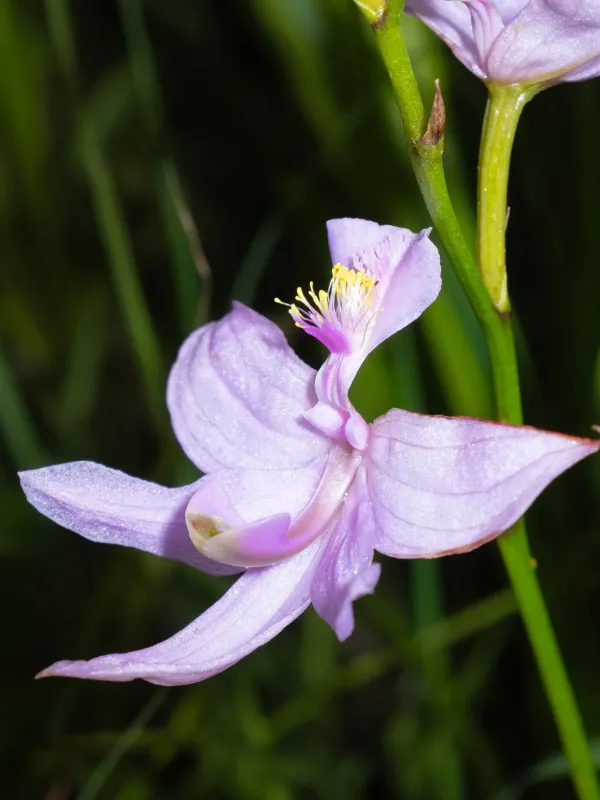
Botanically, the plant is characterized by a corm (a bulb-like underground storage organ) and slender, grass-like leaves. The inflorescence is a terminal raceme featuring vibrant pink-to-purple flowers that exhibit a unique mechanism where the lip moves to trap pollinators.
For agricultural and horticultural success, soil acidity and moisture regulation are paramount. The plant requires a specialized medium, typically composed of peat, coarse sand, and perlite, to maintain constant moisture levels while ensuring essential drainage to prevent corm rot.
The primary use of this crop is in ornamental horticulture and conservation-oriented landscaping. It is highly valued by native plant enthusiasts and collectors, although it remains a specialized plant that requires precise maintenance compared to common garden flowers.
Main diseases and pests
The most significant threat to Calopogon oklahomensis is root rot caused by stagnant water or the presence of pathogens in the substrate. Maintaining a healthy balance of soil aeration is critical to preventing fungal outbreaks in the corm system.
Insect pests such as aphids, spider mites, and snails can cause damage to the foliage and flower buds. Integrated pest management strategies, focusing on manual removal or mild, plant-safe treatments, are recommended to protect the delicate structures.
Competition from invasive plant species is a major threat in naturalized settings. As a slow-growing orchid, it cannot compete with faster-growing grasses or weeds that deprive it of necessary solar energy and root space.
The dependency on mycorrhizal fungi is a distinct biological vulnerability. If the soil microbiome is disrupted by synthetic fertilizers or herbicides, the orchid will fail to uptake nutrients and eventually perish, regardless of the light or water levels.
Environmental stress, particularly prolonged drought combined with high heat, is detrimental. Since the plant is adapted to moist habitats, any reduction in soil water holding capacity can lead to immediate dormancy and eventual failure of the vegetative cycle.