
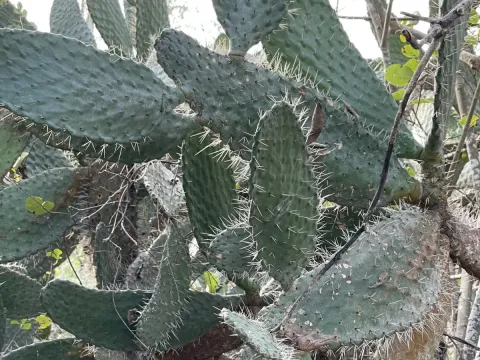
Consolea rubescens
Consolea rubescens
Consolea rubescens, commonly referred to as the roadkill cactus, is a unique, tree-like member of the Cactaceae family. Native to the Caribbean islands, this species has adapted to arid, rocky environments, developing a robust structure with flat, distinctively shaped stem segments that define its appearance.
What the section contains
Consolea rubescens
The cultural requirements for this plant focus on high light intensity. It thrives best in full sun, which is essential to maintain the vibrant reddish-green hue of its segments. Inadequate light will cause the plant to etiolate and become fragile, making optimal placement a primary concern for growers.
Soil composition must prioritize drainage above all else. A porous mix consisting of coarse sand, pumice, and minimal peat is ideal for preventing water stagnation. The plant requires a specialized potting medium that mimics its natural habitat of well-drained, nutrient-poor, rocky substrates.
Watering strategies are centered on the soak-and-dry method. During the active growing season, provide sufficient water only when the substrate is completely dry to the touch. During the winter dormancy period, watering should be significantly reduced or suspended to prevent cold-moisture related issues.
Its primary agricultural and horticultural utility lies in landscape design for arid zones and its value as a specimen plant in desert-themed collections. With its tall, branching architecture, it serves as a striking visual element in botanical gardens and controlled greenhouse environments.
The most common pests affecting this cactus include scale insects and spider mites, which can easily hide within the creases of the stem segments. Regular physical inspection and the use of insecticidal soap or horticultural oil are effective measures for maintaining plant health.
Root rot, driven by overwatering and poor drainage, remains the most significant threat to the survival of Consolea rubescens. Growers should ensure that the pots have ample drainage holes and that the environmental humidity remains relatively low to discourage fungal pathogens.