
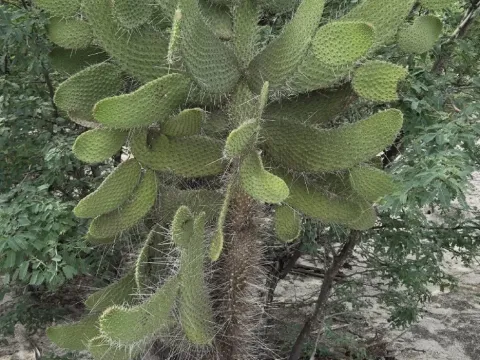
Consolea moniliformis
Consolea moniliformis
Consolea moniliformis is a distinctive member of the Cactaceae family, known for its tree-like habit and flattened, beaded-like stem segments. It is a slow-growing species that can reach significant heights in its native habitat.
What the section contains
Consolea moniliformis
The plant originates from the Caribbean region, specifically found on Hispaniola and surrounding islands. It thrives in arid environments characterized by limestone-rich soils and extreme sun exposure.
Optimal growth requires high levels of solar radiation. In indoor cultivation or greenhouse settings, it should be placed in the brightest spot possible to maintain the structural integrity and characteristic pigmentation.
Soil requirements focus on extreme drainage. A specialized cactus mix consisting of pumice, perlite, and coarse sand is ideal to prevent the roots from remaining in damp conditions for extended periods.
General agro-techniques include a warming period during the growing season with balanced watering. However, it must be kept almost completely dry during the winter months to mimic the natural dormant cycle of the Caribbean dry season.
The most significant threat to the health of Consolea moniliformis is root rot, typically caused by overwatering or poor aeration of the potting substrate. Affected plants show soft or discolored stem bases.
Spider mites are common pests that thrive in dry air conditions. They feed on the epidermis of the stem segments, often leaving behind unsightly scarring and making the plant vulnerable to secondary infections.
Mealybugs represent a persistent challenge due to their ability to hide in the crevices between stem segments. Their presence is often identified by white, cotton-like masses on the surface of the plant.
Scale insects can attach themselves to the surface, protected by their hard shells. These pests are notoriously difficult to remove manually from mature specimens with dense spine clusters.
Preventive measures include maintaining low humidity levels, ensuring excellent ventilation, and regular monitoring of the stem surfaces for early signs of infestation to avoid the need for harsh chemical treatments.