
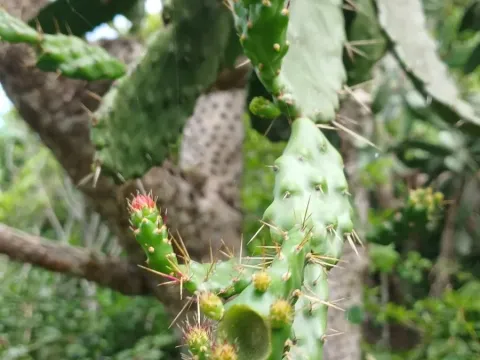
Consolea falcata
Consolea falcata
Consolea falcata is a remarkable tree-like cactus belonging to the Cactaceae family, native to the island of Hispaniola (Haiti). This species is prized by collectors for its unique flat, segmented branches that eventually develop into a woody trunk, creating a distinct architectural form.
What the section contains
Consolea falcata
Cultivation of this plant requires high intensity light exposure, similar to its native tropical habitat. It thrives best in full sun, making it an excellent candidate for greenhouse cultivation or bright conservatory settings where natural light is abundant throughout the day.
The substrate must be highly porous and well-draining. A mix of standard cactus potting soil enriched with pumice, perlite, and coarse sand ensures that water flows away quickly, preventing the oxygen-starvation of roots that leads to rapid decay.
Botanically, C. falcata is distinguished by its formidable thorns and flattened cladodes. These segments are structurally robust, allowing the plant to resist the physical stress caused by high winds in its arid native range, while the thorns protect it from herbivores.
Watering practices should be strictly seasonal. During the active growth phase, allow the substrate to dry out entirely between waterings. In the winter dormancy period, watering should be minimal to non-existent to mimic the natural drought cycle and promote plant health.
Root rot is the most significant threat to Consolea falcata, usually resulting from inadequate drainage or excessive soil moisture during cool weather. Maintaining a dry substrate during the winter is the most effective preventative measure against fungal outbreaks.
Mealybugs are a frequent pest that finds shelter in the crevices between the segments of the cactus. Regular inspections are necessary to detect early infestations before they spread across the entire structure of the plant.
Spider mites can also become a nuisance in environments with poor air circulation and low humidity. These pests damage the skin of the plant, causing unsightly yellowing or scarring that is permanent and mars the natural beauty of the specimen.
Scale insects may attach themselves to the woody parts of the stem or the segments. Because they are protected by a waxy cover, systemic insecticides or manual removal with alcohol-soaked tools are generally the most effective ways to manage them.
Fungal pathogens such as Fusarium can cause localized necrosis. If spots are detected, immediate removal of the infected tissue with a sterilized blade is required, followed by applying sulfur or cinnamon powder to the wound to seal it against moisture.