
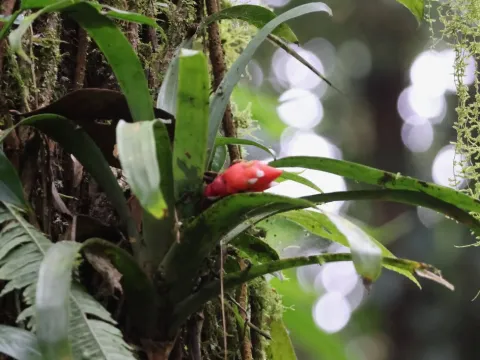
Guzmania
Guzmania Ruiz et Pav.
Guzmania (Guzmania) is a genus of evergreen perennial plants belonging to the Bromeliaceae family. Native to the tropical rainforests of Central and South America, these plants typically grow as epiphytes on tree trunks, displaying unique adaptations for moisture absorption.
What the section contains
 Guzmania blassii
 Rauh
Guzmania blassii
Guzmania blassii Rauh
 Guzmania conifera
 (André) André ex Mez
Guzmania hybrid
Guzmania conifera x Guzmania lingulata
Guzmania conifera
Guzmania conifera (André) André ex Mez
Guzmania hybrid
Guzmania conifera x Guzmania lingulata
 Guzmania lingulata
 (L.) Mez
Guzmania variegata
Guzmania variegata L. B. Sm.
Guzmania lingulata
Guzmania lingulata (L.) Mez
Guzmania variegata
Guzmania variegata L. B. Sm.
 Guzmania wittmackii
Guzmania wittmackii
Guzmania wittmackii
 Guzmania wittmackii and Guzmania lingulata hybrids
Hybrids between Guzmania wittmackii and Guzmania lingulata
Guzmania wittmackii and Guzmania lingulata hybrids
Hybrids between Guzmania wittmackii and Guzmania lingulata
Guzmania
The optimal temperature range for the successful cultivation of Guzmania is between 20°C and 25°C. It is essential to protect the plants from cold drafts and extreme fluctuations in temperature, as these can trigger physiological stress and inhibit the development of the colorful inflorescence.
High relative humidity, ideally between 70% and 80%, is a prerequisite for maintaining the turgor of the foliage. In indoor settings, consistent misting with filtered or distilled water is recommended to mimic the high-humidity environment of their natural habitat.
The substrate must be well-draining and airy to prevent oxygen starvation of the roots. A professional mixture often consists of pine bark, peat moss, perlite, and charcoal, which ensures that water does not stagnate around the base of the plant.
Lighting should be bright but indirect. Direct sunlight can cause significant damage to the leaf tissue, leading to bleaching or necrotic spots. In low-light environments, supplemental artificial lighting can be used to promote healthy photosynthesis and sustain the plant's growth.
Scale insects are among the most common pests affecting Guzmania. These small insects feed on plant sap and secrete a sticky substance known as honeydew, which creates a breeding ground for sooty mold, further damaging the aesthetic and health of the plant.
Mealybugs are another prevalent threat, often hiding in the crevices between leaves. Their presence can be identified by the characteristic white, powdery, or cotton-like masses found at the base of the leaves, requiring prompt intervention with systemic pesticides or horticultural oils.
Root rot is the most dangerous condition caused by overwatering and poor drainage. Once the roots begin to decay, the plant is unable to transport nutrients effectively, which often results in the yellowing of leaves and the rapid decline of the entire plant structure.
Spider mites thrive in dry conditions and can cause severe dehydration of the leaves. Regular cleaning of the foliage and maintaining adequate air humidity are the primary preventative measures against these microscopic but destructive arachnids.
Effective plant protection involves early detection and the use of integrated pest management practices. Keeping the plant clean and providing adequate airflow around the rosette base will significantly reduce the risk of infestation and disease development.