
Guzmania blassii
Guzmania blassii Rauh
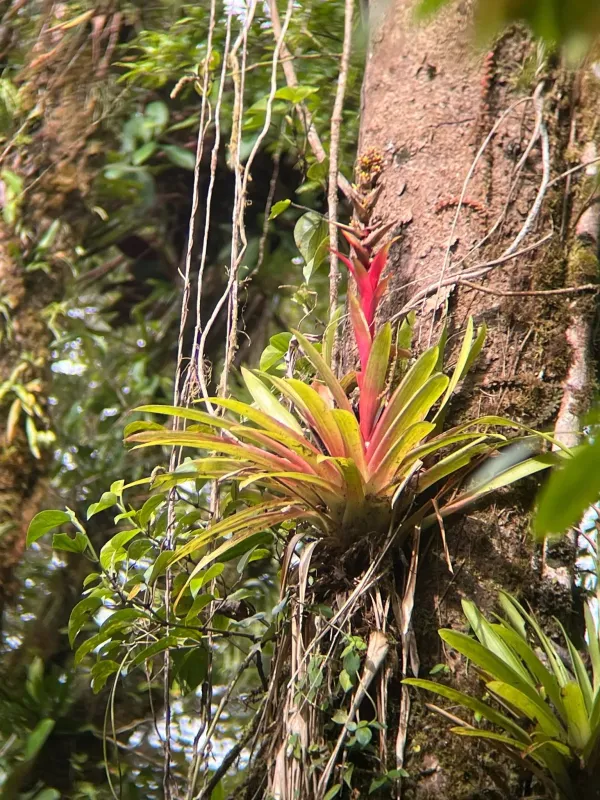
Description
Growing requirements
Guzmania blassii Rauh is a perennial herbaceous plant belonging to the Bromeliad family. Native to the tropical rainforests of Central and South America, this species is typically found growing as an epiphyte on tree branches, where it derives moisture and nutrients from the surrounding environment.
The plant requires a stable temperature range between +20°C and +25°C throughout the year. High atmospheric humidity is critical for its survival, ideally kept at 60–70%. Keeping the plant away from cold drafts and sudden temperature fluctuations is essential for maintaining its health and vibrant coloration.
For cultivation, a highly aerated and well-draining substrate is mandatory. A mixture consisting of pine bark, peat, sphagnum moss, and charcoal is recommended to mimic the natural epiphytic environment and prevent root suffocation or anaerobic conditions within the growing medium.
The watering technique for Guzmania blassii is unique; water should be poured directly into the central leaf rosette, which serves as a reservoir. It is crucial to use soft, room-temperature water and ensure that it is changed periodically to prevent the accumulation of minerals or pathogens.
Bright, filtered light is necessary for optimal development. Direct sun exposure must be avoided to prevent leaf scorching, while inadequate light can lead to loss of the plant's intense colors. Supplemental LED growth lighting is advisable during the winter months to maintain the plant's structural integrity.
Main diseases and pests
Scale insects and mealybugs are the most common pests that infest Guzmania blassii. These pests feed on the plant's sap, weakening the foliage and potentially attracting sooty mold. Regular visual inspection of the leaf axils and undersides of the leaves is vital for early detection.
Root rot and crown rot are the primary pathological threats, usually caused by overwatering or poor drainage. Excess water retained in the leaf rosette when ambient temperatures are low creates a breeding ground for fungi, which quickly leads to the decay of the plant's core.
To prevent disease, it is essential to ensure good air circulation around the plant. Avoiding water stagnation in the rosette during cool nights is a key management practice for long-term health and vigor in domestic growing conditions.
Treatment for pest infestation includes using gentle insecticidal soaps or specific systemic pesticides labeled for use on ornamental bromeliads. Affected parts should be isolated from other plants to prevent the spread of mites or scale insects across the collection.
In cases of advanced fungal decay, management is difficult, often requiring the removal of infected tissue and complete replacement of the substrate. Maintaining a hygienic environment and balanced moisture levels is the best approach to ensuring a long life for this tropical specimen.