
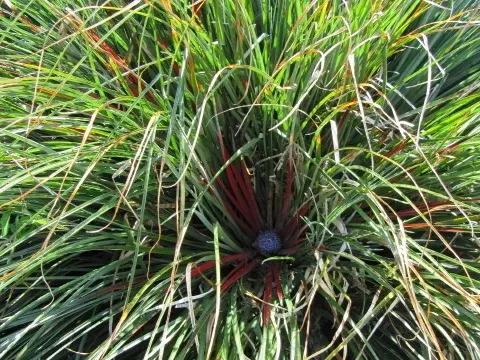
Fascicularia
Fascicularia
Fascicularia is a genus of evergreen perennials belonging to the Bromeliaceae family. Native primarily to the forests of Chile, these plants are known for their striking rosettes and are frequently utilized in ornamental horticulture for their unique foliage coloration.
What the section contains

Fascicularia
The plant thrives in cool to moderate climates, mirroring its natural habitat. While it can handle mild frost, it is generally grown in containers in northern latitudes to allow for easy protection during severe winter months when temperatures drop below freezing.
Regarding soil requirements, Fascicularia demands a well-draining substrate. A mix of peat moss, pine bark, and perlite or coarse sand is highly recommended to prevent waterlogging, which the plant's root system is particularly sensitive to.
Sunlight exposure is crucial for the plant's health and aesthetic appeal. Bright, indirect light is ideal, as it encourages the central leaves of the rosette to develop deep crimson or red pigments, which is a hallmark feature of the blooming stage.
Watering should be conducted with care, ensuring the soil remains moist but never saturated. In warmer months, small amounts of water can be introduced into the central rosette "tank," though this should be avoided if the ambient temperature is low to prevent rotting.
Fascicularia can be susceptible to common greenhouse pests, with mealybugs and scale insects being the most frequent invaders. These pests tend to lodge in the dense leaf bases, making manual removal or systematic pesticide application necessary.
Spider mites are another significant threat, particularly in indoor environments with low humidity. Infestations lead to stippling and discolouration of the foliage, necessitating regular misting or the use of miticides.
Root rot and crown rot represent the most severe diseases, typically caused by poor drainage or excessive soil moisture. These conditions favor fungal pathogens that quickly compromise the structural integrity of the plant.
Control strategies for these threats rely on a combination of cultural practices, such as increasing ventilation, and chemical interventions. It is important to treat infestations at the first sign to prevent the colony from spreading to the entire rosette.
Regular sanitation is paramount for maintaining a healthy collection. This includes removing dead lower leaves and ensuring that no debris accumulates in the center of the plant, as decaying organic matter creates a prime environment for bacterial growth.