
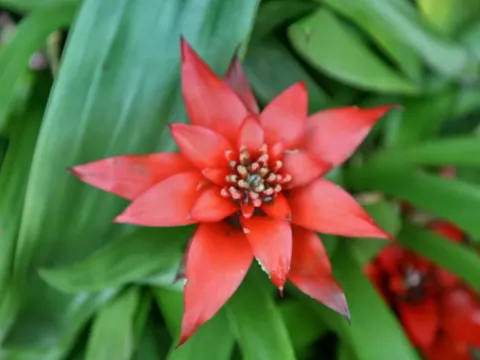
Guzmania hybrid
Guzmania x Tillandsia
Guzmania x Tillandsia is an intergeneric hybrid within the Bromeliad (Bromeliaceae) family, valued for its long-lasting, vibrant floral bracts. These plants are essentially epiphytic, originating from tropical regions of the Americas, where they utilize their specialized rosette structure to collect moisture and nutrients directly from the air and rain.
What the section contains

Guzmania hybrid
Optimal environmental requirements include bright, filtered light. These hybrids are prone to leaf scorching if placed under direct sunlight for extended periods. A temperature range between 20°C and 25°C is ideal, with consistency being the most critical factor for healthy physiological development.
The substrate must be extremely well-draining, mimicking the aeration found in tree crevices. A high-quality mix should contain orchid bark, perlite, and coconut fiber. The container size should be kept relatively small to prevent excessive soil moisture, which can be detrimental to the plant's delicate root system.
Watering techniques for this hybrid are unique; water should be applied primarily into the central rosette (the tank) and only occasionally to the growing medium. Using soft, dechlorinated water is essential, as these plants are highly sensitive to mineral buildup and chlorine toxicity, which can cause leaf tips to brown.
Humidity management is crucial for the successful maintenance of this hybrid. Regular misting of the surrounding air is recommended, especially in indoor environments with low humidity. This creates a microclimate similar to their natural rainforest habitat and encourages more vigorous bract formation.
The most common pests affecting Guzmania hybrids are mealybugs and scale insects. These pests often congregate at the base of the leaves or deep within the rosette, making them difficult to detect early. Systematic insecticides or neem oil treatments are effective methods of management.
Root rot, often caused by stagnant water or a waterlogged substrate, is the most common physiological disorder. Once the roots begin to decay, the entire plant structure quickly loses its ability to transport nutrients, leading to rapid decline and necrosis of the center of the rosette.
Fungal infections can also manifest as dark, unsightly spots on the foliage. These are often indicators of poor airflow and high humidity. Providing adequate ventilation around the plants is the most effective preventative measure against such pathogens.
Leaf tip necrosis is a frequent issue caused by low humidity or the use of hard water. While not a disease in the biological sense, it significantly lowers the ornamental value of the culture and is a clear indicator that the environmental parameters need to be adjusted.
To ensure long-term health, growers should practice regular sanitation, removing any dead or decaying foliage from the base. Maintaining a clean growing environment prevents the build-up of bacteria and spores that thrive in the decaying organic matter typically found in bromeliad containers.