
Guzmania wittmackii and Guzmania lingulata hybrids
Hybrids between Guzmania wittmackii and Guzmania lingulata
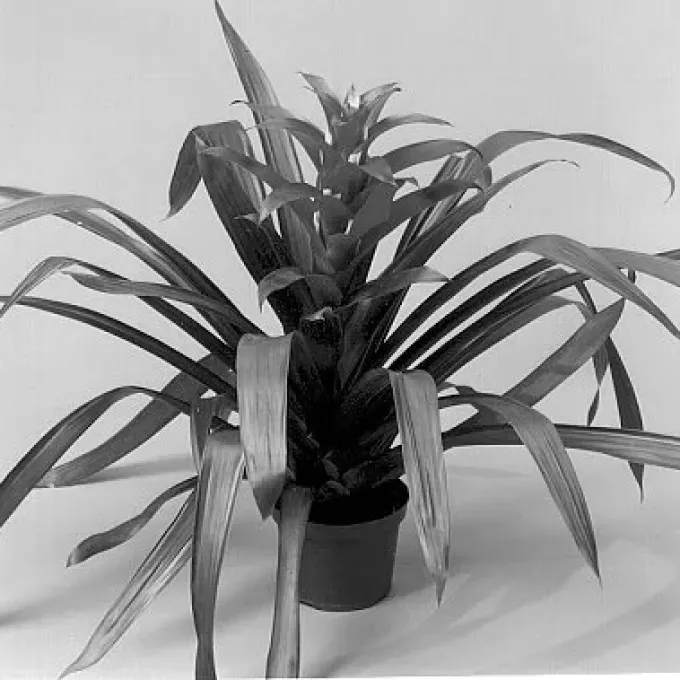
Description
Growing requirements
Hybrids of Guzmania wittmackii and Guzmania lingulata belong to the Bromeliad family (Bromeliaceae). These plants are specialized tropical epiphytes native to the humid rainforests of Central and South America, where they naturally grow in the forks of tree branches or on mossy rocks.
Optimal cultivation requires a stable climate with temperatures ranging between 20°C and 25°C. Maintaining high atmospheric humidity, ideally between 60% and 70%, is essential for the healthy development of their foliage and the longevity of their vibrant floral bracts.
The growing medium must be highly porous and well-drained. A traditional epiphyte mix containing orchid bark, peat moss, perlite, and charcoal is recommended to provide sufficient oxygen to the root system while preventing waterlogging, which the plants cannot tolerate.
Bright but filtered sunlight is required for these hybrids to thrive. Direct sunlight will bleach the leaves and damage the bracts, whereas deep shade will inhibit the flowering process and cause the plant to stretch significantly, losing its structural aesthetic.
Watering techniques for Guzmania are unique: water must be poured into the central tank formed by the rosette of leaves. It is crucial to use only soft, chlorine-free water at room temperature to avoid mineral salt buildup that can stress the plant tissues.
Main diseases and pests
Common pests affecting these bromeliads include mealybugs, scale insects, and spider mites. These pests thrive in dry indoor air, necessitating regular inspection of the leaf bases and the central tank area to catch infestations early before they compromise plant health.
Fungal diseases and root rot are frequent problems caused by overwatering or stagnant water in the rosette during cooler periods. Providing adequate air circulation and using well-draining substrates are the most effective cultural controls against these pathogenic threats.