
Navia
Navia
Navia is a genus of perennial herbaceous plants belonging to the Bromeliaceae family. Unlike many other members of this family, Navia species are terrestrial, meaning they grow directly in the soil or rock crevices rather than on other plants.
What the section contains

Navia
Originating primarily from the northern regions of South America, specifically the Guiana Highlands of Venezuela, these plants are adapted to unique montane environments. They thrive in rocky, well-drained habitats at high altitudes where humidity remains consistently elevated.
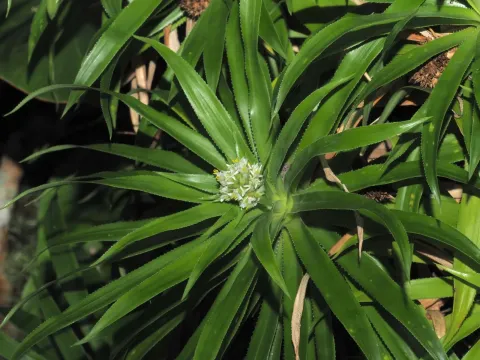
The botanical structure of Navia consists of stiff, often serrated leaves forming a tight rosette. This morphology allows them to channel water towards the center of the plant or efficiently capture sparse moisture from mountain mists, making them highly specialized survivors.
To cultivate Navia successfully, you must simulate its natural habitat by providing excellent drainage. A substrate consisting of rocky grit, perlite, and a small amount of peat or pine bark is ideal to prevent root rot, which is the most common cause of failure.
Light requirements are intense; these plants need bright, filtered light. Providing adequate airflow is critical, as stagnant, humid air combined with poor light levels will lead to weak growth and susceptibility to pathogens, preventing the plant from reaching maturity.
Pests such as spider mites are common in indoor or greenhouse cultivation, particularly during dry seasons. They attack the base of the leaves, causing discoloration and eventual decline of the plant if left untreated by appropriate miticides or frequent washing.
Fungal issues such as root rot are the primary threats. Because Navia is sensitive to waterlogged conditions, even short periods of standing water in the substrate can trigger rapid decomposition of the roots, necessitating immediate repotting into fresh, dry media.