
Guzmania wittmackii
Guzmania wittmackii
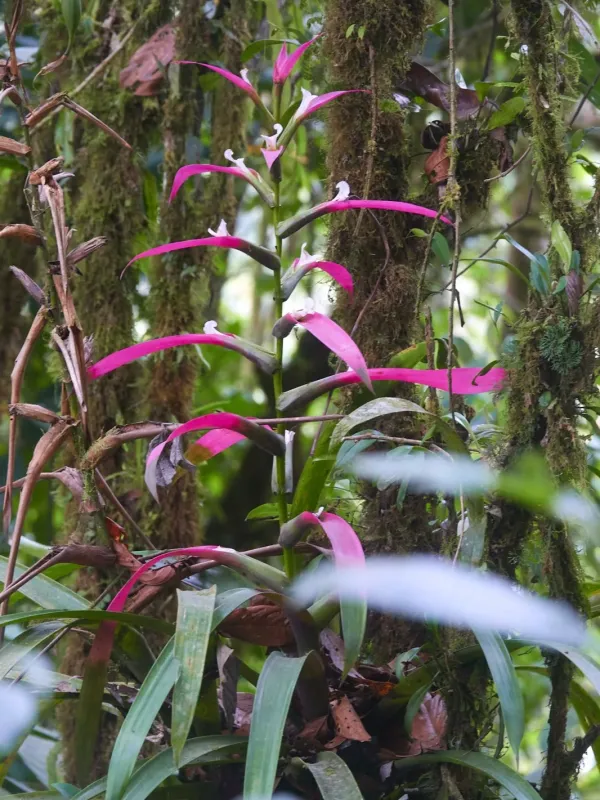
Description
Growing requirements
Guzmania wittmackii belongs to the Bromeliaceae family and is recognized as a distinctive epiphytic species. Its origin can be traced back to the tropical rainforests of Colombia and Ecuador, where it typically grows on tree trunks and rocky substrates.
To successfully cultivate this species, it is essential to replicate a tropical microclimate with a stable temperature range between 20°C and 25°C. The plant should be protected from direct sunlight, which can easily scorch the leaf surface, preferring bright, filtered light instead.
The botanical structure includes a tight leaf rosette that acts as a reservoir. Water management is critical; moisture should be provided by filling the central tank of the rosette, while the soil medium must remain relatively moist but not waterlogged to prevent rot.
A well-draining substrate is a fundamental requirement. Growers should utilize a mix consisting of pine bark, perlite, sphagnum moss, and charcoal to ensure proper root oxygenation, as the plant is sensitive to compacted, non-breathable soil.
In ornamental horticulture, Guzmania wittmackii is highly valued for its long-lasting, vibrant inflorescences. The flower spikes can remain in peak condition for several months, making it a staple in professional interior landscaping and commercial floral production.
Main diseases and pests
The primary pest threats to Guzmania wittmackii are scale insects, mealybugs, and spider mites. These pests typically congregate at the base of the leaves, drawing sap and causing significant vigor loss and unsightly blemishes.
Fungal rots represent the most common disease risk. These are primarily caused by over-irrigation or inadequate drainage, leading to the rapid decay of the core tissues if the plant remains in a cold and damp environment.
Effective management strategies include the application of mild systemic insecticides. It is crucial to avoid saturating the central tank with chemical treatments, as this can lead to toxic accumulation within the plant's drinking reservoir.
Proactive care involves consistent humidity monitoring and ensuring adequate air ventilation. Proper airflow helps dissipate excess moisture on the foliage, significantly reducing the likelihood of fungal pathogen colonization.
In cases of severe infestation or rot, affected plants should be quarantined immediately. Mechanical removal of pests using soft brushes and diluted soapy water is often the first line of defense before resorting to chemical interventions.