
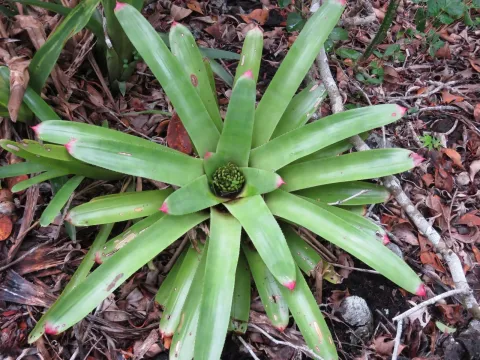
Neoregelia
Neoregelia
Neoregelia is a genus of tropical plants belonging to the Bromeliaceae family. Native to the rainforests of South America, these plants are primarily epiphytes, utilizing their tank-like leaf structure to collect water and nutrients.
What the section contains


Neoregelia
Successful cultivation requires bright, indirect sunlight. While some varieties tolerate shade, proper light intensity is crucial for the development of the vivid, bright colors in the foliage that define the aesthetic value of this culture.
The growing medium must be highly porous and well-draining, mimicking the natural environment of tree bark and decaying matter. An ideal mix includes orchid bark, peat moss, perlite, and charcoal.
Watering is unique to bromeliads, as it involves keeping the central tank filled with fresh water. It is essential to flush the tank periodically to prevent mineral buildup and bacterial growth.
Temperature and humidity are critical for Neoregelia development. They thrive in consistent temperatures between 20°C and 25°C and require high humidity levels to support their aerial root systems and foliage health.
Common pests affecting Neoregelia include mealybugs and scale insects. These pests often congregate at the base of the leaves, hiding in the rosette where they are difficult to reach with standard surface treatments.
Root rot and crown rot are frequent issues caused by poor drainage or overly stagnant water in the soil. These pathogens typically emerge when the substrate remains waterlogged for extended periods.
Spider mites are a major threat, particularly in dry indoor environments with low humidity. They can cause significant foliage damage, manifesting as fine webbing and pale, stippled leaf surfaces.
Management involves systemic insecticides or horticultural oils applied according to local agricultural standards. Regular inspection of the leaf axils is the most effective preventative measure.
Cultivation success is highly dependent on environmental stability. Avoiding drafts and ensuring good airflow around the foliage are fundamental practices to minimize the risk of bacterial and fungal infections.