
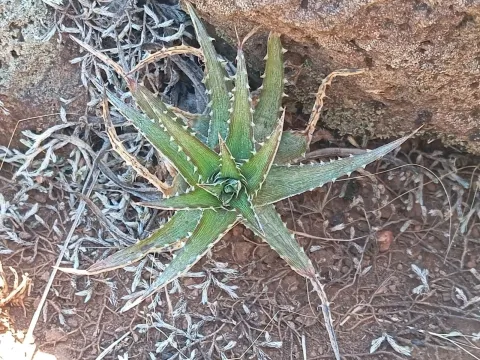
Dyckia
Dyckia
Dyckia is a genus of succulent perennial plants belonging to the Bromeliaceae family. Native to South America, particularly Brazil, Argentina, and Uruguay, these plants are typically found growing in rocky, well-drained habitats and open grasslands.
What the section contains


Dyckia
The primary environmental requirement for Dyckia is intense, direct sunlight. When grown under adequate light, the plants develop stiff, sharp-edged leaves and compact rosettes, which are essential for their ornamental value and general health.
Regarding soil composition, Dyckia requires an extremely porous substrate. A typical mix includes coarse sand, gravel, and perlite combined with a small amount of potting soil, ensuring that water drains away from the root zone instantly.
Watering practices should be strictly regulated. While these plants are drought-tolerant, they benefit from consistent moisture during the growing season; however, standing water in the leaf center must be avoided to prevent stem rot.
In terms of agricultural and horticultural use, Dyckia is valued as a low-maintenance landscape plant for arid regions and as an interesting specimen in conservatory collections. Its drought resistance makes it a sustainable choice for water-wise landscaping.
The most significant threat to Dyckia is root rot, which typically stems from poor drainage or excessive watering. Once the root system is compromised, the plant often fails to recover unless re-rooted from healthy offsets.
Spider mites are common pests that thrive in the dry, warm environments where Dyckia is typically kept. Regular inspection of the underside of the leaves and the leaf axils is necessary to detect early infestations.
Mealybugs are another recurring issue, often nesting deep within the tight leaf bases where they are difficult to reach with standard contact insecticides. Systemic pesticides are generally more effective in controlling these outbreaks.
Fungal leaf spots can develop if the air circulation around the plants is insufficient. Proper spacing in nursery production or greenhouse setups is crucial to ensure the plants stay dry after watering and to prevent pathogen buildup.
While Dyckia is quite hardy, frost damage is a major risk in non-tropical climates. Protection during extreme cold is essential for cultivars that are not adapted to freezing temperatures, as cell damage can lead to quick decay.