
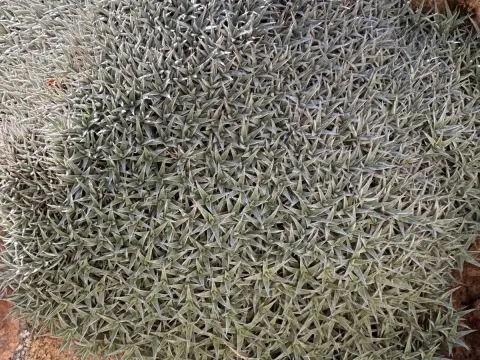
Deuterocohnia
Deuterocohnia
Deuterocohnia is a genus within the Bromeliaceae family, native to the arid and rocky landscapes of South America, specifically in regions across Argentina and Bolivia. These plants are well-adapted to survive in harsh conditions where water is scarce and light intensity is high.
What the section contains


Deuterocohnia
Botanically, they are characterized by their compact, rosette-forming leaves that are often spine-tipped and highly succulent. These structures allow them to store moisture effectively, enabling the plants to thrive in crevices of rocks or on steep, nutrient-poor slopes.
The primary environmental requirement for Deuterocohnia is intense sunlight. In cultivation, these plants need a location that receives full sun for the majority of the day to maintain their natural growth pattern and structural integrity, preventing the foliage from etiolating.
Soil composition must be extremely porous and fast-draining, mimicking the mineral-rich, stony ground of their natural habitat. A mixture of gravel, grit, and very little organic matter is ideal for ensuring that water passes through quickly, protecting the roots from rot.
In terms of хозяйственное (horticultural) use, Deuterocohnia is highly valued in ornamental gardening, particularly for xeriscaping and rock gardens. Its geometric, architectural form serves as a focal point in landscapes that require low-maintenance and drought-tolerant plant species.
The most significant threat to the health of Deuterocohnia is moisture-related illness. Excessive humidity, combined with poor drainage, leads to root rot and crown rot, which can destroy the plant rapidly if not addressed by strictly controlling the watering schedule.
Pests such as mealybugs represent a common challenge, as they seek refuge in the dense, tightly packed bases of the leaves. Spider mites may also occur in indoor or greenhouse settings where the air is excessively dry and lacks sufficient circulation.
Cultural prevention includes maintaining good airflow and ensuring the substrate is completely dry before subsequent watering. Avoiding water accumulation in the center of the rosette is a fundamental rule for maintaining healthy foliage throughout the growing season.
For pest management, systemic insecticides are effective, though they should be applied with caution due to the succulent nature of the leaves. Regular inspection of the plant's heart and the undersides of the foliage is essential for early intervention against infestations.
Sterilization of pots and the use of fresh, sterile potting media during repotting processes are crucial steps in preventing the onset of soil-borne pathogens. Maintaining a clean growing environment is the best long-term strategy for managing disease risks.