
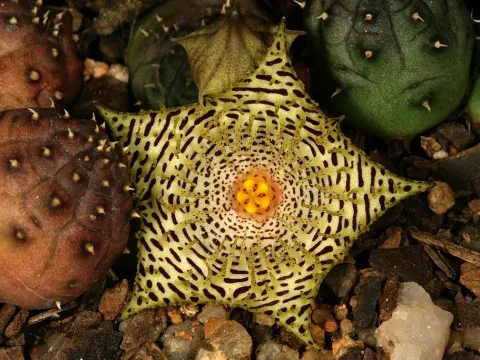
Huernia
Huernia
Huernia is a genus of succulent perennial plants belonging to the Apocynaceae family. Native to the arid regions of Africa, these plants are highly adapted to harsh environments where water is scarce for long periods.
What the section contains
 Huernia hallii
Huernia hallii
Huernia hallii
 Huernia hislopii
Huernia hislopii
Huernia hislopii
 Huernia hystrix
Huernia hystrix
Huernia hystrix
 Huernia kirkii
Huernia kirkii
Huernia kirkii
 Huernia macrocarpa
Huernia macrocarpa
Huernia macrocarpa
 Huernia pendula
Huernia pendula
Huernia pendula
 Huernia reticulata
Huernia reticulata
Huernia reticulata
 Huernia thuretii
Huernia thuretii
Huernia thuretii
 Huernia verekeri
Huernia verekeri
Huernia verekeri
 Huernia zebrina
Huernia zebrina
Huernia zebrina
Huernia
Botanically, Huernia is characterized by its leafless, ribbed, and toothed stems. These stems are succulent in nature, allowing the plant to store significant reserves of moisture to endure extended droughts in its natural habitat.
For successful cultivation, Huernia requires bright, indirect light. Placing the plant in a location with partial shade or filtered sunlight is essential, as intense direct sun during peak hours can scorch the succulent tissues.
The potting medium must be extremely well-draining. A specialized commercial mix for cacti and succulents, amended with extra perlite, grit, or pumice, is recommended to ensure that moisture does not accumulate around the root system.
Temperature management is key to healthy growth. During the active growing season, standard room temperatures are ideal. However, a cool dormant period with temperatures between +12 and +15 degrees Celsius is necessary during winter months to stimulate flowering.
The most significant threat to Huernia is overwatering, which quickly leads to root rot and fungal infections. Maintaining a strict cycle of letting the soil dry out completely between waterings is crucial for survival.
Common pests include mealybugs and spider mites. These insects thrive in dry conditions and often hide in the crevices of the ribbed stems, making early detection and treatment with appropriate pesticides or horticultural oils necessary.
Maintaining good air circulation around the plants can significantly reduce the risk of fungal outbreaks. Stagnant air coupled with humidity creates a perfect breeding ground for various pathogens that affect succulents.
Regular monitoring of the stem surfaces and root health is part of standard maintenance. If rot is detected at the base, it is often necessary to cut off the healthy upper parts of the stems to propagate and save the specimen.
Preventative care also involves using sterile potting equipment and avoiding organic matter in the soil mix that may carry dormant fungal spores. Hygiene is vital in keeping the collection free from infestation.