
Huernia thuretii
Huernia thuretii
Description
Growing requirements
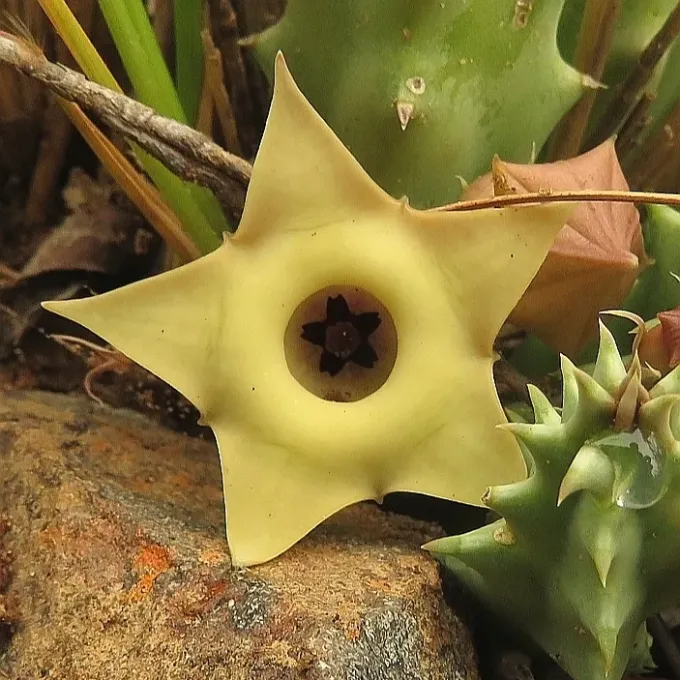
Huernia thuretii is a small succulent plant belonging to the Apocynaceae family. It is characterized by its distinctively thick, four-angled stems that feature small teeth along the edges, designed to store water for survival in arid environments.
Originating from Southern Africa, this plant has adapted to harsh, dry climates. In horticultural practice, it is widely grown as an ornamental plant in greenhouses and containers due to its unique appearance and intriguing floral structure.
The plant requires bright, indirect light to thrive. While it can handle some morning sun, excessive afternoon heat should be avoided to prevent stem scorch. Proper lighting encourages healthy growth and vivid coloration of the succulent stems.
A well-draining substrate is non-negotiable for Huernia thuretii. It is recommended to use a mix composed of coarse sand, perlite, and a small amount of organic compost to ensure that water does not remain trapped around the root system.
Cultural management involves seasonal changes in irrigation. During the active growing season, water sparingly, allowing the soil to dry out completely. In the dormant winter season, irrigation should be reduced to an absolute minimum.
Main diseases and pests
The primary threat to Huernia thuretii is root rot, typically caused by overwatering or poorly draining soil. If the substrate remains wet for extended periods, the base of the stems may decay, leading to irreversible damage.
Mealybugs are the most common pests found on this species. These small, cotton-like insects congregate in the crevices between stem tubercles, making them difficult to spot and treat without careful inspection.
Spider mites can also become a problem in environments with low humidity and high temperatures. They manifest as fine webbing and can cause the epidermis of the plant to become discolored and scarred.
Fungal infections, often appearing as dark or rusty spots, can develop if the plant is kept in an environment with high humidity and stagnant air. Improving airflow is a vital step in maintaining the health of the collection.
For pest control, horticultural soap or specific systemic insecticides can be used. Always ensure the plant is placed in a well-ventilated area after treatment to prevent further stress and promote recovery.