
Huernia hallii
Huernia hallii
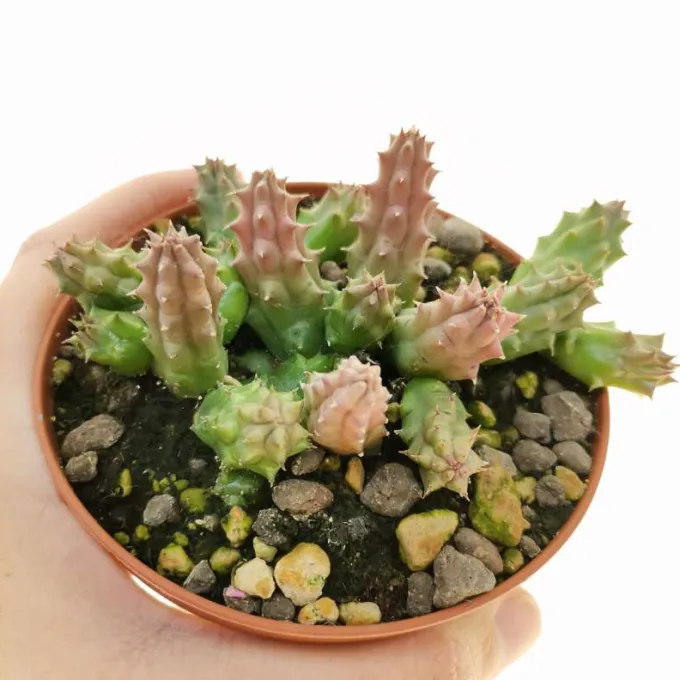
Description
Growing requirements
Huernia hallii is a succulent species belonging to the Apocynaceae family. Originating from the arid regions of Southern Africa, this plant has evolved to thrive in harsh, desert-like conditions with minimal water and poor soil quality.
Botanically, the plant is characterized by its low-growing, clustered stems that feature distinct ribs and soft tubercles. It possesses succulent tissues designed to store hydration, which is essential for survival during prolonged droughts in its natural habitat.
For cultivation, provide the plant with bright, indirect light. While it loves sunshine, intense afternoon sun may scorch its delicate stems, so eastern or western exposure is ideal for maintaining the plant's health and coloration.
The optimal temperature range during the active growing season is between 20°C and 25°C. During the winter dormancy period, the plant should be kept cooler, ideally around 12°C to 15°C, with significantly reduced watering to encourage resting.
A well-draining substrate is mandatory for this crop. Using a commercial cactus mix amended with additional perlite, coarse sand, or small gravel ensures that water drains quickly, preventing the root system from sitting in stagnant moisture.
Main diseases and pests
Overwatering is the primary threat to Huernia hallii, often leading to rapid root rot or stem decay. It is crucial to allow the soil to dry out completely between watering sessions to prevent the development of pathogenic fungi.
Mealybugs are the most common pests, often hiding in the crevices between the stems. Regular visual inspections are necessary, and infestations should be treated promptly with insecticidal soap or cotton swabs dipped in isopropyl alcohol.
Spider mites can also become a problem in environments with low humidity and high temperatures. Increasing air circulation and maintaining proper hygiene around the plant pots help mitigate the risk of mite colonization.
Fungal issues may manifest as dark, mushy spots on the stems, indicating systemic rot. If identified early, the affected parts should be removed with a sterile blade, and the plant must be repotted into fresh, dry substrate to halt the infection.
Consistent, moderate care is the best strategy for disease prevention. By monitoring moisture levels and keeping the foliage dry, growers can successfully maintain these unique succulents for many years with minimal intervention.