
Huernia verekeri
Huernia verekeri
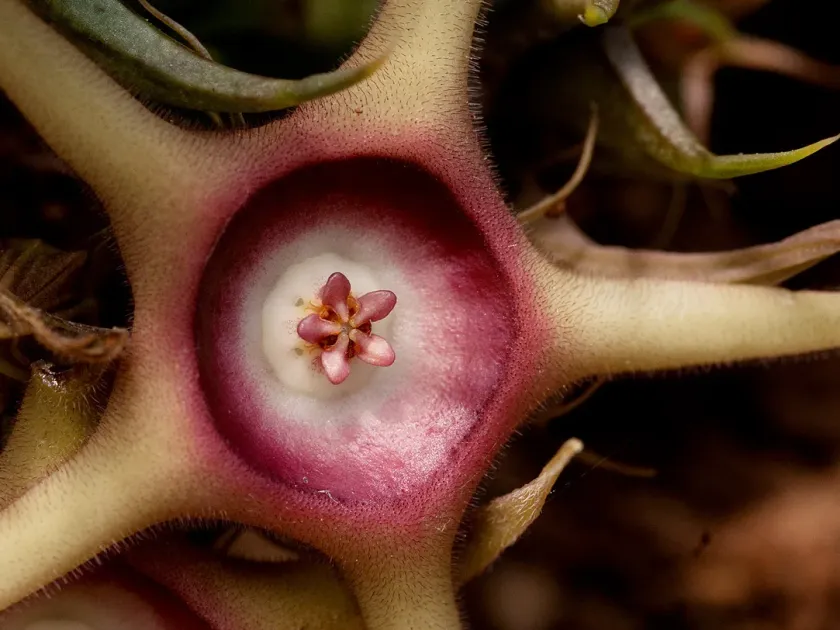
Description
Growing requirements
Huernia verekeri is a fascinating succulent species belonging to the Apocynaceae family. It is characterized by its succulent, angular stems that often feature small, tooth-like projections, which contribute to its distinctive sculptural appearance in cultivation.
The plant originates from the arid regions of Southern Africa, including Zimbabwe. It is strictly adapted to warm climates and requires specialized care in controlled environments, such as greenhouses or well-lit indoor spaces, to thrive throughout the year.
Proper lighting is essential for the healthy development of this species. It demands bright, indirect sunlight to maintain its structural integrity. Inadequate light levels will lead to etiolation, where the stems become weak, pale, and elongated, losing their natural robustness.
The soil medium for Huernia verekeri must be exceptionally well-draining. A mix consisting of mineral components such as pumice, perlite, and coarse sand combined with a small fraction of organic material is recommended to prevent water retention around the roots.
Temperature management is key to successful cultivation. The plant prefers temperatures ranging from 20°C to 28°C during the growing season. During the winter dormancy period, temperatures should be kept slightly cooler, but never below 10°C to avoid tissue damage.
Main diseases and pests
The primary threats to the health of this succulent are fungal diseases triggered by excessive soil moisture and poor air circulation. Root rot is particularly destructive and often fatal if not identified early, manifesting as dark, soft lesions on the stem base.
Pests such as mealybugs and spider mites are frequent invaders in indoor environments. These pests thrive in dry conditions and can cause significant damage by feeding on the sap of the stems. Regular inspection and the use of appropriate pesticides are necessary for effective control.