
Huernia reticulata
Huernia reticulata
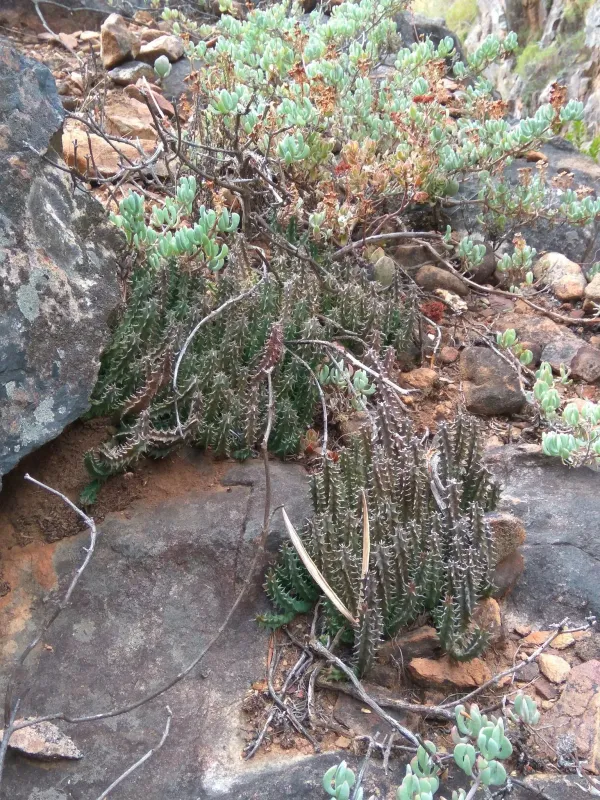
Description
Growing requirements
Huernia reticulata is a fascinating succulent species belonging to the Apocynaceae family. Native to the arid regions of Southern Africa, this plant has evolved to thrive in environments with irregular rainfall and intense sunlight, making it highly drought-tolerant.
Botanically, the plant consists of thick, fleshy, angular stems that often have small, soft tubercles along their edges. The plant produces distinctive, reticulated, bell-shaped flowers during the warmer months, which are a major attraction for enthusiasts of exotic botanical species.
Success in cultivation requires a highly porous, inorganic-based substrate. A mixture of pumice, coarse perlite, and a small amount of sandy potting soil is ideal to ensure that water drains away from the root zone quickly, preventing anaerobic conditions.
Lighting requirements are significant; the plant demands bright, indirect light to maintain its compact growth form. While it can handle some direct morning sun, high-intensity midday sun can lead to scorching of the epidermis, requiring shaded positioning during peak summer months.
Temperature management is vital, particularly during the dormant season. Huernia reticulata should be kept in a well-ventilated area with temperatures ranging from 12°C to 15°C during winter. In the active growing season, standard room temperatures between 22°C and 28°C are optimal.
Main diseases and pests
The most critical physiological threat to Huernia reticulata is stem and root rot, commonly triggered by overwatering or poor soil drainage. If the stem tissue appears soft, discolored, or mushy, immediate surgical excision of the infected area followed by fungicide treatment is required.
Pest infestations, particularly mealybugs and spider mites, are common issues in indoor cultivation. Mealybugs often hide in the crevices between stem ribs. Manual removal with a cotton swab dipped in isopropyl alcohol is often sufficient for minor infestations, whereas systemic pesticides are needed for severe cases.