
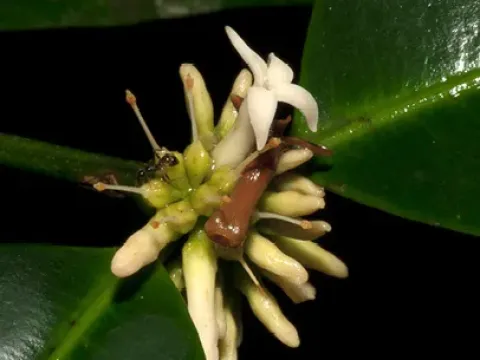
Hunteria
Hunteria
Hunteria is a genus of evergreen trees and shrubs within the Apocynaceae family. These plants are native to tropical regions of Africa and Asia, thriving in high-humidity forest environments where biodiversity is at its peak.
What the section contains

Hunteria
The climate requirements for Hunteria are strictly tropical. The plants demand consistent warmth, typically between 20°C and 30°C, and are extremely intolerant of frost or cold spells. Protection from strong, drying winds is also essential for maintaining leaf turgor.
Soil conditions should focus on high fertility and excellent drainage. The species prefers slightly acidic to neutral soil structures that prevent water stagnation, which is critical for preventing root damage in this genus.
Regarding agrotechnical practices, Hunteria requires a consistent irrigation schedule to mirror the humidity of its native range. Application of organic fertilizers during the active growing season helps sustain the rapid development of the foliage and secondary compounds.
Botanical propagation is primarily achieved through seeds or semi-hardwood cuttings. In nursery settings, a high-humidity environment and controlled temperature are necessary to ensure successful rooting and initial seedling survival.
Root rot caused by stagnant water and pathogenic fungi is the most significant threat to Hunteria health. Management requires precise irrigation control and soil aeration to avoid anaerobic conditions that favor disease development.
Common pests include scale insects and aphids, which can colonize the undersides of leaves. These pests weaken the plant by extracting sap, often leading to secondary sooty mold growth on the sugary secretions left behind.
Integrated pest management (IPM) is recommended for commercial plantings, focusing on biological controls such as predatory insects and botanical oils to mitigate damage without harming the environment.
Regular monitoring for leaf spotting or discoloration is crucial, as these are often the first signs of nutrient deficiency or the onset of viral/bacterial infections common in high-density plantings.
Pruning of dead or decaying branches should be performed during the dry season to minimize the entry points for pathogens and to improve the overall airflow through the plant canopy.