
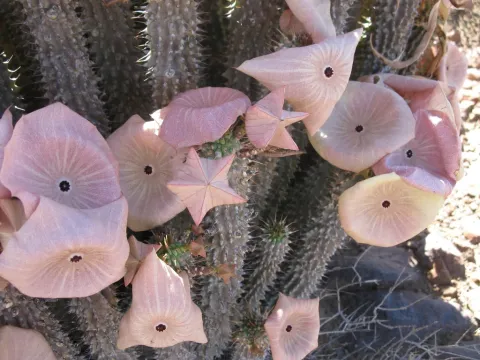
Hoodia
Hoodia Sweet ex Decne.
Propagation of Hoodia in agricultural settings is typically achieved through seeds or stem cuttings. Seeds are sown in well-draining, gritty substrates at temperatures above 25°C.
What the section contains

Hoodia
It is crucial to maintain a steady temperature during germination, as Hoodia seeds are sensitive to thermal fluctuations. Spring is the preferred season for sowing, aligned with the increasing length of daylight.
When using stem cuttings, it is vital to allow the cut to callus over for several days before planting in moist sand to prevent rot and encourage rooting.
Seedlings require delicate care and minimal watering, as the young tissues are highly susceptible to fungal pathogens thriving in overly moist environments.
Growth is inherently slow; therefore, successful cultivation requires patience and consistent monitoring of the plant's development stages over several years.
Hoodia belongs to the Apocynaceae family and is a succulent native to the arid environments of South Africa and Namibia.
The plant requires intense, direct sunlight for the majority of the day to maintain its structural integrity and health.
The soil profile must be extremely porous, composed of mineral-based ingredients like coarse sand, gravel, and pumice to ensure rapid water drainage.
Irrigation must be strictly regulated: during the growing season, water only after the substrate has completely dried out; in winter, reduce watering to near zero during dormancy.
This species cannot tolerate freezing temperatures or high atmospheric humidity, making greenhouse cultivation the only viable option in non-arid climates.
The commercial value of Hoodia is derived from specific bioactive glycosides present in its tissues, historically known for appetite suppression.
Yields of harvestable biomass are dependent on high light intensity and controlled environmental stress, which promotes the accumulation of secondary metabolites.
Large-scale production involves multi-year growth cycles, as the plants require considerable time to reach the required maturity and size for processing.
Harvesting is performed by selective pruning, which allows the plant to continue growing and regenerating over time if managed correctly.
As the plant is protected by international environmental treaties, sustainable plantation farming is strictly regulated to ensure genetic diversity and preservation.
Root and stem rot are the primary threats to Hoodia, often resulting from water accumulation in the potting medium or inadequate air circulation.
Mealybugs and spider mites are the most common pests, capable of rapidly infesting succulent collections if the humidity and temperature are not managed.
Immediate intervention with targeted insecticides is required when pests appear, as they can cause significant tissue damage that leads to secondary infections.
Preventative measures include maintaining high levels of hygiene in the greenhouse and ensuring that the plants are never left in stagnant water.
In cases of infestation, removing the affected plant segments and improving environmental conditions are essential steps to stabilize the culture.