
Douglas grass widow
Olysnium douglasii
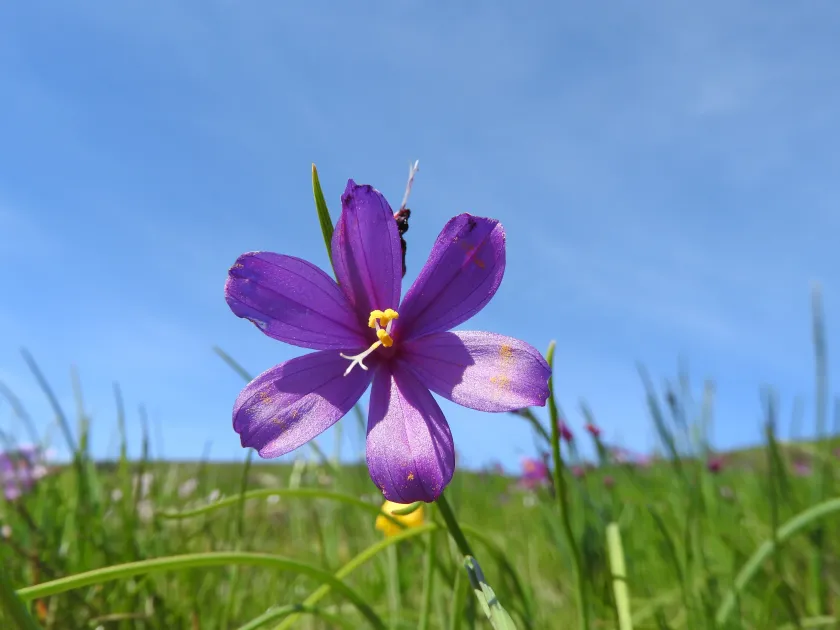
Description
Sowing dates
Douglas grass widow, botanically known as Olysnium douglasii, is a perennial plant of the Iridaceae family that requires specific stratification to break seed dormancy.
Seeds are best sown in late autumn, allowing the cold winter temperatures to naturally prepare the embryos for germination during the upcoming spring season.
For container-grown specimens, seeds should be sown in a well-draining medium composed of sterile potting soil mixed with horticultural sand or perlite.
The planting depth should be shallow, approximately 0.5 centimeters, as the seeds need a small amount of light to trigger the sprouting process effectively.
If spring sowing is necessary, cold stratification in a refrigerator for at least six weeks at temperatures around 4 degrees Celsius is mandatory for success.
Growing requirements
This species is native to western North America and thrives in environments that mimic its natural habitat, which consists of open, grassy slopes.
Soil composition is critical for Olysnium douglasii; it demands loose, gritty, and well-draining soil to prevent moisture from accumulating around the base.
The plant requires full sun exposure to maintain its compact growth habit and to promote the development of its characteristic early-spring blossoms.
Watering should be conducted with caution; while the soil should remain moist during the active growth phase, it must be allowed to dry out significantly during the summer dormancy.
As a plant adapted to temperate climates, it appreciates good airflow, which helps regulate humidity levels and reduces the risk of physiological stress.
Main diseases and pests
The most significant threat to the health of the plant is root rot, typically caused by waterlogged soil conditions or improper drainage in the planting area.
Insect pests, including aphids and thrips, can cause damage to the foliage and flower buds, particularly when the plants are stressed by heat or drought.
Slugs and snails often pose a risk to newly emerged seedlings and young leaves, as they find the succulent texture of the plant highly attractive.
Fungal leaf spot diseases can occur if the planting density is too high or if environmental conditions remain excessively damp for prolonged periods.
Integrated pest management, including the use of neem oil or insecticidal soaps, is recommended to keep pest populations under control without harming the environment.
Harvesting
As Olysnium douglasii is cultivated primarily for its aesthetic and ecological value in wildflower gardens, it is not harvested for food or fiber purposes.
Seed harvesting is performed when the capsules start to dry and turn brown, indicating that the seeds have reached physiological maturity.
Proper cleaning and air-drying of the seeds are essential steps before storage in paper envelopes, which should be kept in a cool and dry location until planting.
Dividing the rhizomes is a standard maintenance practice that can be carried out every few years once the plant has fully entered its dormant stage after flowering.
Removing spent blooms helps divert energy away from seed production, thereby strengthening the root system and ensuring vigorous growth in the following season.