
Huernia pendula
Huernia pendula
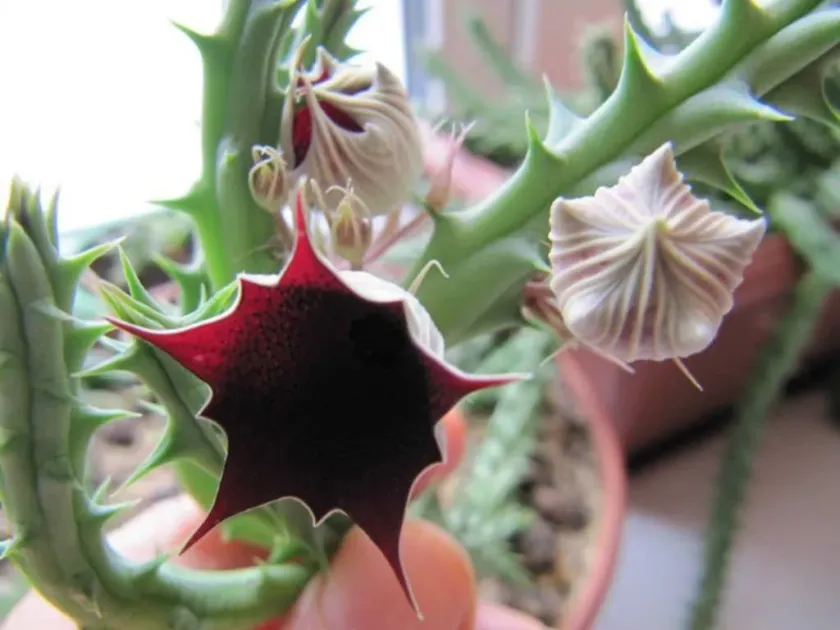
Description
Growing requirements
Huernia pendula is an interesting succulent species belonging to the Apocynaceae family, specifically the tribe Ceropegieae. Originating from the rocky landscapes of Yemen, it has adapted perfectly to arid environments.
The plant is distinct for its trailing growth habit, with long, slender, succulent stems that cascade over the edges of pots. The stems are typically green, sometimes tinged with purple or red when grown under optimal light conditions.
A well-draining soil medium is the absolute requirement for this species. Commercial cactus and succulent mixes amended with extra perlite or pumice are recommended to ensure proper aeration for the root system.
This succulent thrives in bright, indirect light. While it can handle some early morning sun, intense afternoon direct light can scorch the delicate tissues of the stems, leading to irreversible damage.
Watering should be performed cautiously. It is best to wait until the potting mix is thoroughly dry before applying more water. During the winter dormancy, the plant requires very little moisture to survive.
Main diseases and pests
The primary concern for Huernia pendula is rot, particularly collar rot, which stems from overwatering or poorly draining soil. If the base of the plant turns mushy or dark, immediate action is required to save the cuttings.
Mealybugs are the most common pest found on this plant. They tend to settle in the grooves along the stems, making them difficult to detect. Manual removal or specific systemic insecticides are often needed.
Spider mites can also cause issues, especially in low-humidity environments. They typically leave small yellow spots on the stems and create very fine webbing, which weakens the overall health of the plant.
Aphids can occasionally infest the growing tips during the spring, sucking the sap and potentially transmitting viral pathogens. These should be managed with mild horticultural soaps or appropriate pesticides.
To prevent disease outbreaks, avoid wetting the stems when watering, as moisture trapped against the skin of the plant encourages fungal growth and bacterial rot, especially in stagnant air conditions.