
Huernia zebrina
Huernia zebrina
Description
Growing requirements
Huernia zebrina is a striking succulent species belonging to the Apocynaceae family. Native to the arid regions of Southern Africa, it has evolved into a drought-tolerant plant capable of storing water in its succulent stems to survive harsh climatic conditions.
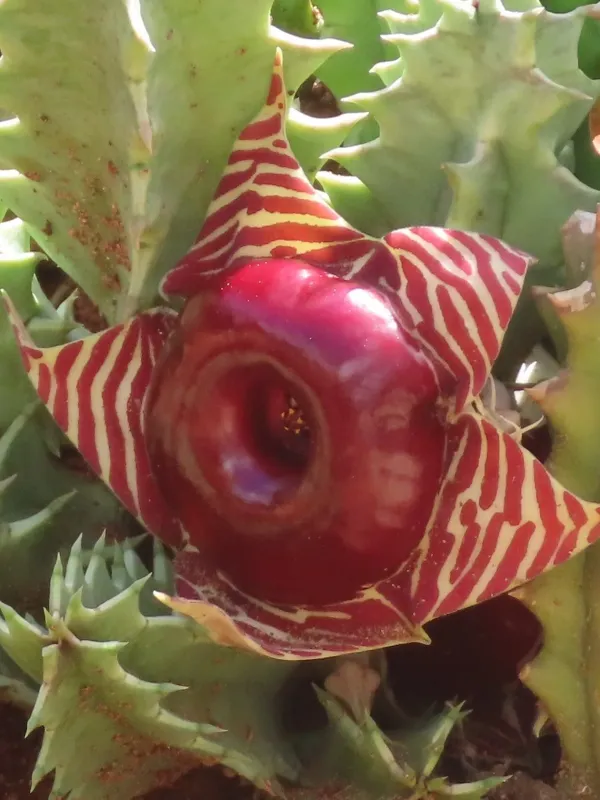
Botanically, the plant consists of low-growing, four-angled stems that form clusters. Its most iconic feature is the complex, zebra-striped flower with a glossy, elevated ring in the center, which serves to attract specific pollinators in its natural habitat.
Cultivation requires plenty of bright, indirect sunlight to maintain the compact growth form and promote flowering. Excessive shade will cause the stems to etiolate and become weak, while direct intense afternoon sun may scorch the green epidermis.
The substrate must be highly porous and inorganic-heavy to ensure rapid drainage. A mix comprising pumice, perlite, and coarse sand combined with a small amount of potting soil creates the ideal environment for the root system to breathe and prevent stagnation.
During the active growth season, temperatures should range between +20 °C and +28 °C. Providing a distinct winter dormancy period with temperatures dropping to about +12 °C is crucial to mimic its natural cycle and stimulate the development of flower buds in the following spring.
Main diseases and pests
Overwatering is the primary threat to Huernia zebrina, leading directly to stem rot and root decay. If the soil remains consistently damp, the internal tissues of the succulent collapse, making it difficult to recover the plant from such physiological stress.
Mealybugs are the most common pest found on this species, typically aggregating in the grooves of the stems. They are difficult to detect initially but can cause significant damage by draining the plant's sap and spreading opportunistic fungal infections.
Spider mites can also become a problem in dry, poorly ventilated conditions. Their presence is usually indicated by fine webbing and yellowing patches on the stems, which requires immediate intervention with acaricides to save the affected segments.
Fungal pathogens pose a risk when environmental humidity is too high or when water is splashed onto the stem surfaces. Keeping the environment airy and ensuring that the plant remains dry is the most effective way to prevent the onset of various rots.
For pest control, it is recommended to use systemic insecticides or neem oil solutions. Always isolate the affected plants to prevent the spread of insects or pathogens to other succulent collections, ensuring all tools are sterilized before use.