
Huernia hystrix
Huernia hystrix
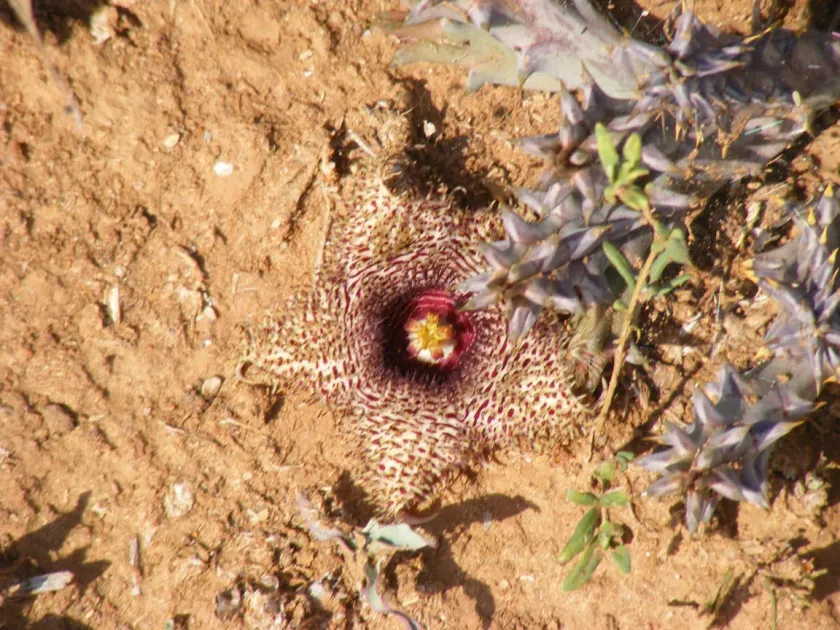
Description
Growing requirements
Huernia hystrix is a unique succulent species belonging to the Apocynaceae family, native to the arid regions of Southern Africa. It is highly valued for its striking, spiny-looking flowers that resemble small stars, making it a popular choice for succulent collectors.
The primary requirement for this culture is a well-draining substrate. Growers should use a specialized cactus and succulent potting mix amended with coarse sand, perlite, or pumice to ensure that excess water can easily escape the root zone.
Light intensity is crucial for the health and blooming cycle of the plant. Huernia hystrix thrives in bright, indirect light, though it can tolerate morning sun. Excessive afternoon heat may cause stem scorching and permanent tissue damage if not mitigated by shading.
Watering practices must be disciplined: the plant requires a "soak and dry" approach. During the active growing season, water only when the soil medium has completely dehydrated. During the winter dormancy, watering should be reduced to an occasional light misting.
Temperature management is key to successful cultivation. The plant prefers warm, stable conditions during the summer, ranging from 20 to 26 degrees Celsius, while a cooler, dry rest period in winter, ideally around 12–15 degrees, is necessary to induce flowering.
Main diseases and pests
Root rot is the most frequent and deadly threat to Huernia hystrix. It occurs primarily due to poor drainage, heavy soil mixtures, or over-watering, which leads to the collapse of the succulent stems starting from the base.
Mealybugs are common pests that tend to hide in the crevices between the succulent stems. They feed on plant sap and can weaken the specimen significantly, leading to secondary fungal or bacterial infections.
Spider mites can also become a problem in excessively dry environments with low air circulation. These pests produce fine webbing and cause discoloration on the surface of the stems, impacting the aesthetic and vital health of the plant.
Treatment involves physical removal of visible pests using alcohol-soaked swabs and applying systemic insecticides when necessary. Maintaining proper ventilation around the plant is one of the best preventative measures against pest outbreaks.
Consistent monitoring and ensuring that the plant is never sitting in water are the most important steps to safeguard against both biological threats and environmental stress-related diseases.