
Huernia macrocarpa
Huernia macrocarpa
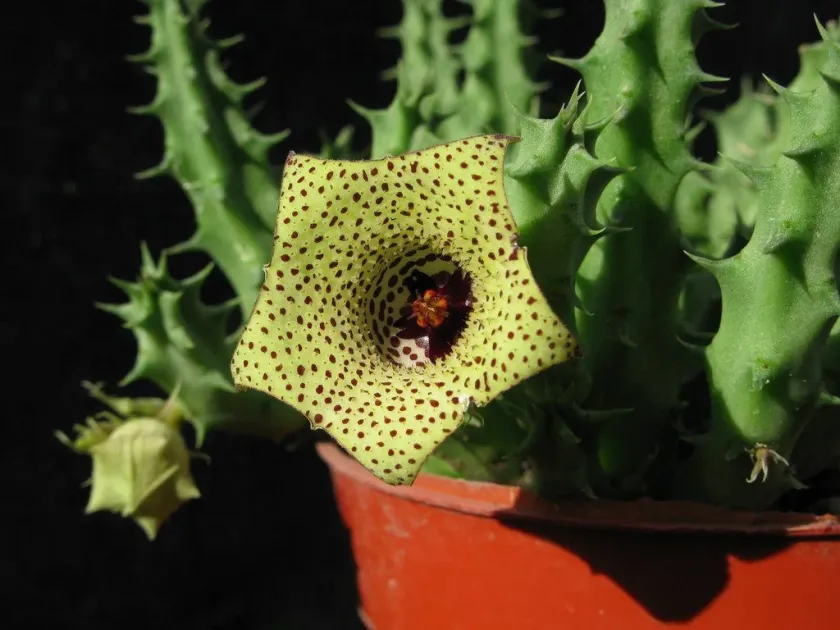
Description
Growing requirements
Huernia macrocarpa is a specialized succulent plant belonging to the Apocynaceae family. Native to the arid regions of East Africa and the Arabian Peninsula, this species is highly adapted to extreme environmental conditions and seasonal moisture scarcity.
Botanically, the plant features distinct, ribbed stems that act as water storage organs. Its compact size and unique growth habit make it a popular specimen for collectors who specialize in drought-tolerant flora and xerophytic plants.
Cultivation requires a bright environment with ample indirect sunlight. While the plant can tolerate some direct morning sun, intense afternoon heat can scorch the succulent epidermis, making proper positioning essential for long-term health.
The growing medium must be highly inorganic and porous. A standard mix should consist of volcanic rock, coarse sand, and a minimal amount of organic matter, ensuring that the roots are never subjected to prolonged saturation or anaerobic conditions.
Temperature management is crucial: the plants thrive at 20-25 degrees Celsius during the active growing season. In winter, they enter a dormancy phase, requiring cooler temperatures around 12-15 degrees and significantly reduced water intake.
Main diseases and pests
The primary threat to the health of Huernia macrocarpa is fungal root rot, which occurs due to poor ventilation or stagnant water in the root zone. Ensuring a dry substrate during the winter months is the best preventive measure against such infections.
Pest management focuses on controlling mealybugs and spider mites, which can settle in the crevices between the stem ribs. Regular inspection using a magnifying glass and immediate application of horticultural oils or systemic insecticides can prevent severe damage.