
Huernia kirkii
Huernia kirkii
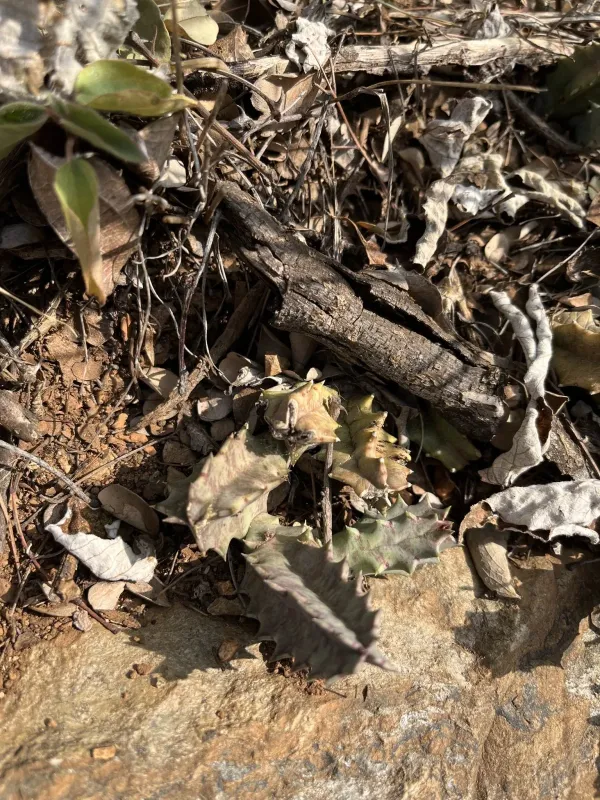
Description
Growing requirements
Huernia kirkii belongs to the Apocynaceae family, specifically the tribe Ceropegieae. This species is native to the arid regions of Southern Africa, exhibiting a creeping growth habit typical of plants adapted to desert environments.
Botanically, it is defined by its succulent, angular stems that can store significant moisture. These stems are often mottled with darker patches and carry small, soft tubercles, making them highly decorative even outside the flowering season.
The plant thrives in a well-draining, gritty soil mix. A mixture consisting of 50% inorganic material (coarse sand, pumice, or perlite) and 50% organic substrate is recommended to prevent moisture retention around the roots.
Regarding climate, Huernia kirkii requires bright, indirect light. While it can tolerate some morning sun, midday exposure should be limited to avoid tissue scorching, which manifests as permanent discoloration on the stems.
Watering frequency is governed by the 'soak and dry' principle. During the active growing season, wait until the substrate is entirely dry before watering again. In winter, maintain nearly dry conditions to simulate the natural resting phase.
Main diseases and pests
The primary pests affecting Huernia kirkii are mealybugs and spider mites. Mealybugs often cluster at the base of the stems or in the crevices between tubercles, complicating physical removal.
Spider mites thrive in environments with low humidity, causing fine webbing and localized chlorosis on the stem epidermis. Regular inspection of the plant's surface is vital for early detection.
Root rot caused by fungal pathogens is the most critical threat. It is almost exclusively triggered by overwatering or using a medium with poor drainage, leading to the collapse of the vascular system.
Management strategies involve keeping the potting medium sterile and ensuring high airflow around the plant. If a plant shows signs of fungal infection, immediate repotting into fresh, dry medium is required.
- Use systemic insecticides for persistent pest infestations.
- Apply sulfur-based fungicides to affected areas if rot is identified early.
- Always use terra-cotta pots to enhance soil moisture evaporation.
- Avoid splashing water on the stems during irrigation.
- Keep the plant in a well-ventilated area to reduce fungal pressure.