
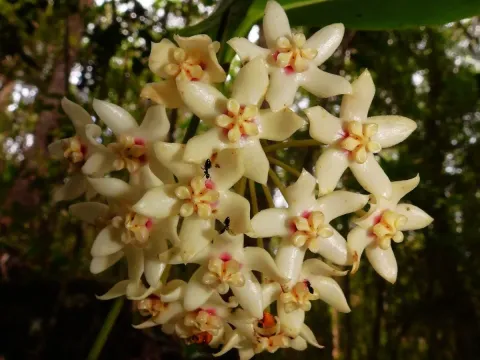
Hoya
Hoya
Hoya is a diverse genus of tropical evergreen climbing plants and shrubs belonging to the Apocynaceae family. Native to regions across Southeast Asia, Australia, and the Pacific Islands, these plants have evolved as epiphytes in tropical rainforests. Their unique botanical adaptation includes thickened, succulent-like leaves designed to store hydration and nutrients during periods of variable moisture.
What the section contains
 Hoya scortechinii
Hoya scortechinii
Hoya scortechinii
 Hoya serpens
Hoya serpens
Hoya serpens
 Hoya shepherdii
Hoya shepherdii
Hoya shepherdii
 Hoya sigillatis
Hoya sigillatis
Hoya sigillatis
 Hoya spartioides
Hoya spartioides
Hoya spartioides
 Hoya sussuela
Hoya sussuela
Hoya sussuela
 Hoya thomsonii
Hoya thomsonii
Hoya thomsonii
 Hoya tsangii
Hoya tsangii
Hoya tsangii
 Hoya tsiangiana
Hoya tsiangiana
Hoya tsiangiana
 Hoya verticillata
Hoya verticillata
Hoya verticillata
 Hoya wallichii
Hoya wallichii
Hoya wallichii
 Hoya wayetii
Hoya wayetii
Hoya wayetii
Hoya
The cultivation of Hoya requires a consistent environment with temperatures ranging from 18 to 26 degrees Celsius. These plants thrive under bright, indirect light; excessive exposure to harsh sunlight can scorch the foliage, while insufficient light hinders the development of flowers. Maintaining a stable environment free from sudden cold drafts is crucial for the health of the plant.
Soil requirements focus on high porosity and excellent drainage properties. A specialized substrate blend typically includes orchid bark, perlite, sphagnum peat, and charcoal. This mix mimics the natural environment of epiphytes, ensuring that roots receive adequate oxygen while allowing surplus water to drain away freely, which is vital to prevent root damage.
Agrotechnical practices involve a 'soak and dry' watering method, where the substrate is allowed to dry out significantly before the next watering cycle begins. During the growing season, applying a balanced, diluted liquid fertilizer encourages vigorous development and blooming. Periodic pruning helps in maintaining a manageable plant structure and promotes denser foliage growth throughout the season.
The economic value of Hoya lies primarily in the horticulture and interior design industries, where it is highly prized for its ornamental qualities. Many species are cultivated for their unique, waxy, star-shaped flowers and their intense fragrance. Large-scale propagation is typically achieved through stem cuttings, ensuring the preservation of the phenotypic characteristics of specific cultivars.
Common pests affecting Hoya include mealybugs, scale insects, and spider mites. These pests thrive in dry environments and can quickly infest stems and leaf undersides. Control measures involve the application of systemic insecticides or horticultural oils, as well as maintaining optimal humidity levels to deter mite populations from establishing on the plant surfaces.
Fungal pathogens such as botrytis and root rot are frequently encountered if the soil remains waterlogged for extended periods. To manage these threats, it is essential to ensure adequate air circulation and to avoid wetting the leaves during the night. If rot is detected, immediate removal of affected tissue and soil replacement are necessary to recover the plant's physiological balance.