
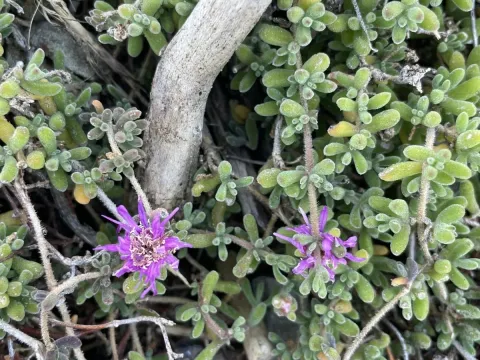
Drosanthemum
Drosanthemum
Propagation of Drosanthemum is primarily achieved through seeds or stem cuttings. The optimal time for sowing seeds is late winter or early spring to ensure the seedlings benefit from increasing daylight hours.
What the section contains
 Drosanthemum bellum
Drosanthemum bellum
Drosanthemum bellum
 Drosanthemum candens
Drosanthemum candens
Drosanthemum candens
 Drosanthemum floribundum
Drosanthemum floribundum
Drosanthemum floribundum
 Drosanthemum globosum
Drosanthemum globosum
Drosanthemum globosum
 Drosanthemum hispidum
Drosanthemum hispidum
Drosanthemum hispidum
 Drosanthemum luederitzii
Drosanthemum luederitzii
Drosanthemum luederitzii
 Drosanthemum speciosum
Drosanthemum speciosum
Drosanthemum speciosum
Drosanthemum
Seeds should be sown in a loose, well-draining sandy or peaty substrate. They require a temperature of about +20°C to +22°C and high humidity, which is best achieved by covering the containers with glass or plastic.
Cuttings are a more common and reliable method for maintaining specific plant characteristics. Cuttings should be taken in the summer and allowed to air-dry for at least 24 hours before insertion into the rooting medium.
Once rooted, young plants must be acclimated to outdoor conditions gradually to prevent damage from direct sunlight and temperature fluctuations.
Final transplantation into garden beds or permanent containers should be delayed until all frost risks have passed, as the root system is highly sensitive to cold soil temperatures.
Drosanthemum belongs to the Aizoaceae family and originates from arid regions of South Africa. As a result, the plant is evolutionarily adapted to high solar radiation and low moisture availability.
The plant requires full sun exposure for the majority of the day. Insufficient light leads to etiolation, where stems become elongated, weak, and less prone to flowering.
Soil quality must prioritize drainage above all else. Sandy or gravelly soil mixes that do not retain water are essential to prevent the root rot commonly associated with this genus.
Watering should be managed carefully, ensuring the soil dries out completely between waterings. During winter dormancy, moisture intake should be reduced to an absolute minimum.
Fertilizer application should be light and infrequent. A balanced or low-nitrogen liquid fertilizer formulated for succulents is sufficient to support seasonal growth without inducing excessive soft tissue growth.
Root rot is the most significant threat to Drosanthemum, almost always caused by poor soil drainage, overwatering, or prolonged humidity levels exceeding the plant's tolerance.
Mealybugs are the most common pests found on this succulent. They tend to hide in the joints of the stems and between leaves, where they extract nutrients from the plant tissue.
Spider mites may affect the plants, especially in indoor or greenhouse settings where the air is excessively dry and lacks proper air circulation.
Effective pest management relies on early detection and the use of appropriate systemic insecticides to eliminate localized infestations before they spread across the plant.
Good hygiene practices, such as removing dead plant debris and ensuring constant air movement, are the best preventative measures against both fungal pathogens and pest invasions.