
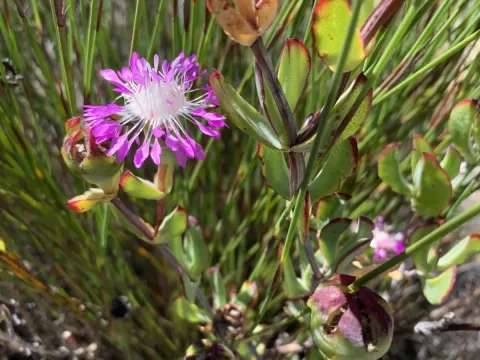
Erepsia
Erepsia
Erepsia is a genus of succulent plants within the Aizoaceae family, native to the arid regions of the Cape Province in South Africa. These plants grow as low shrubs and are well-adapted to extreme environmental stress found in their natural habitat.
What the section contains

Erepsia
Successful cultivation requires specific soil conditions characterized by excellent drainage. A substrate consisting primarily of inorganic components like coarse sand, perlite, and small gravel is recommended to prevent root suffocation and rot.
Light intensity is perhaps the most critical factor for maintaining the health of Erepsia. As a sun-loving species, it requires several hours of direct sunlight daily; without sufficient light, the plant becomes etiolated and loses its characteristic compactness.
The climate requirements for this genus involve distinct dry and cool periods. While they thrive in warm temperatures during the growing season, they are not frost-hardy and must be protected from freezing temperatures in temperate climates.
Watering practices must be strictly controlled, reflecting the plant's succulent nature. During the summer, water only when the substrate has dried out completely, and significantly reduce or cease watering entirely during the winter dormant phase.
The primary threats to Erepsia are fungal pathogens, specifically those causing root and crown rot, which are triggered by excess moisture. Overwatering combined with poor aeration is the most frequent cause of plant mortality in domestic collections.
Pests such as mealybugs and spider mites are common enemies of indoor succulents. These insects often hide in the tight junctions between leaves, where they feed on the plant's sap and weaken its overall structure over time.
Prevention is centered on maintaining a dry and well-ventilated environment. Stagnant air encourages the spread of both pests and fungal spores, so ensuring consistent airflow is essential for a healthy plant collection.
In cases of infestation, systemic insecticides or horticultural oils may be used to manage the population of pests. It is advisable to test any treatment on a small portion of the plant first to ensure that the delicate leaf tissues are not damaged by the application.
Routine inspection is the best defense against major outbreaks. By observing the plant for discolored patches or wilting leaves, growers can address issues before they become terminal, ensuring the longevity of these beautiful succulents.