
Drosanthemum luederitzii
Drosanthemum luederitzii
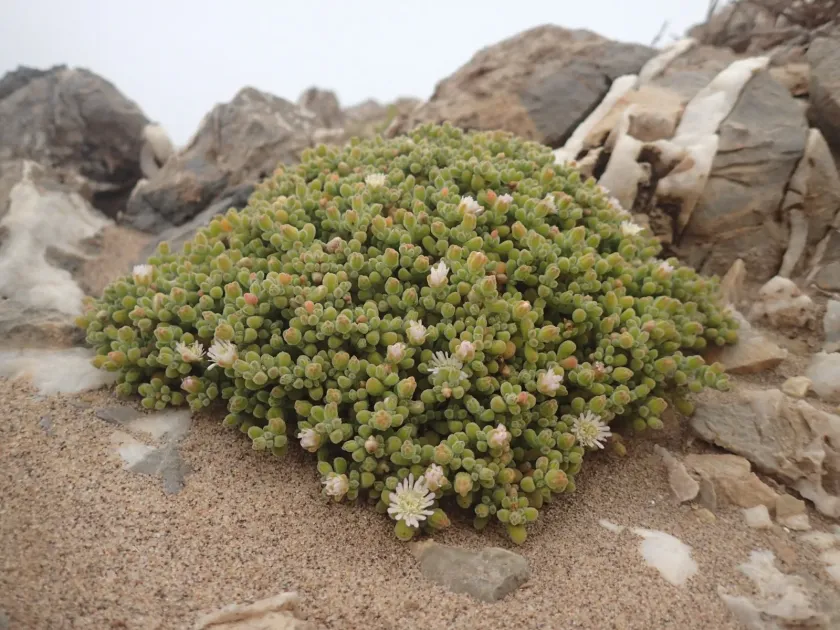
Description
Growing requirements
Drosanthemum luederitzii is a resilient succulent species belonging to the Aizoaceae family. Native to the arid regions of Southern Africa, this plant has adapted to survive in extreme environments characterized by high heat and very low precipitation levels.
The plant features specialized succulent leaves that store water, allowing it to maintain metabolic processes during prolonged dry spells. Its growth habit is typically spreading or prostrate, making it an excellent candidate for xeriscaping or decorative rock gardens.
Abundant sunlight is a fundamental requirement for the healthy development of this species. In cultivation, it thrives best when exposed to direct solar radiation for the majority of the day, which maintains the plant's compact form and vibrant tissue color.
Soil requirements revolve around exceptional drainage and aeration. A substrate composed of coarse sand, gravel, and minimal organic matter is ideal to prevent root asphyxiation, which is the most common cause of decline for this succulent type.
Watering practices must be strictly controlled and adapted to seasonal changes. During the active growth phase, watering should occur only when the soil has dried out completely throughout the container, ensuring that no moisture remains trapped near the root zone.
Main diseases and pests
Fungal infections and root rot are the primary threats to Drosanthemum luederitzii. These conditions are almost exclusively triggered by overwatering or soil mixes that fail to drain properly, leading to the rapid decay of the plant's succulent structure.
Mealybugs are the most persistent insect pests, often colonizing the crevices of the foliage. These pests can be difficult to eliminate once they are established, making early detection and manual removal or insecticidal treatment essential for maintaining plant vigor.
Spider mites represent a significant risk in low-humidity environments or stagnant air conditions. Their presence is usually indicated by fine webbing and yellowing of the leaf tips, which can severely compromise the aesthetic and health of the plant.
Preventive measures include maintaining proper air circulation around the plants and avoiding physical damage to the leaves. Any wounded tissue should be allowed to callus over before it comes into contact with moist soil or humid conditions.
To keep the plants healthy, it is recommended to monitor the entire collection regularly. If an infestation occurs, isolation of the affected plant and the use of targeted systemic treatments are the most effective strategies for long-term control.