
Drosanthemum bellum
Drosanthemum bellum
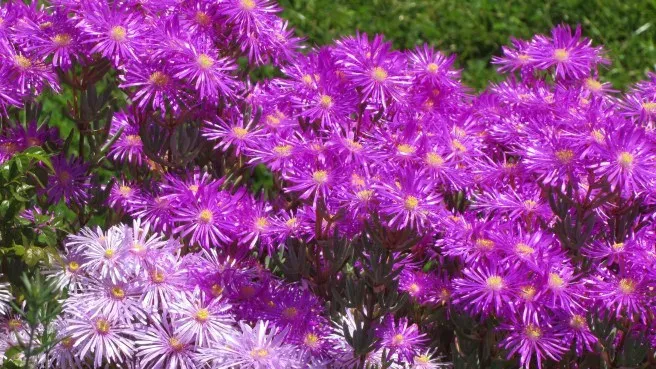
Description
Sowing dates
The propagation of Drosanthemum bellum is most effectively achieved through seeds or cuttings. Sowing should ideally occur in early spring to take advantage of increasing daylight hours, which are crucial for seedling development.
Seeds require a gritty, well-draining substrate to prevent damping-off, a common issue in seedling stages. Maintaining a consistent temperature of approximately 20°C ensures a higher germination rate and more uniform growth.
Vegetative propagation via cuttings is preferred for maintaining consistency in ornamental characteristics. Cuttings must be allowed to callus over for several days after excision before being placed into the growing medium.
The rooting medium should consist of a mix of coarse sand and perlite. This ensures that the base of the cutting remains dry enough to avoid rot while retaining enough moisture to encourage root development.
Once established, the young plants should be gradually acclimatized to higher light levels and reduced watering schedules to prepare them for their final planting site or container.
Growing requirements
Drosanthemum bellum, a member of the Aizoaceae family, is native to the arid landscapes of South Africa. As a true succulent, it has evolved specific physiological traits to store water in its fleshy leaves.
The species demands high-intensity solar radiation to maintain its structural integrity. Inadequate light leads to etiolation, where the plant stretches and loses the compact, dense form essential for its ornamental value.
Soil requirements are strict: the substrate must be extremely lean and porous. A mix specifically formulated for cacti and succulents, containing significant mineral content, is recommended for container gardening.
Watering must follow the soak-and-dry method. During the active growth season, water should be applied only when the substrate has completely dried out, while in winter, water should be significantly reduced or stopped entirely.
This species is not frost-hardy and requires protection from freezing temperatures. In regions with cold climates, it is best treated as a decorative seasonal plant or grown in mobile containers for easy movement indoors.
Main diseases and pests
The most significant threat to this species is overwatering, which quickly leads to root decay and fungal infections. Ensuring a high-drainage environment is the best preventative measure against such issues.
Common pests include the mealybug, which can hide within the crevices of the succulent's growth. Manual removal or the use of targeted systemic insecticides can effectively manage infestations.
Spider mites can also cause significant damage, especially in environments with low airflow and high heat. Regular inspection and increasing air circulation can help minimize the risk of these pests.
Bacterial spots or rots may emerge if the plant experiences excessive humidity. If infections occur, it is necessary to excise the affected tissue and treat the area with a fungicide to prevent further spread.
Maintaining a clean, debris-free environment around the base of the plant is essential. Decaying organic matter near the stems provides a breeding ground for pathogens that can easily compromise the plant.