
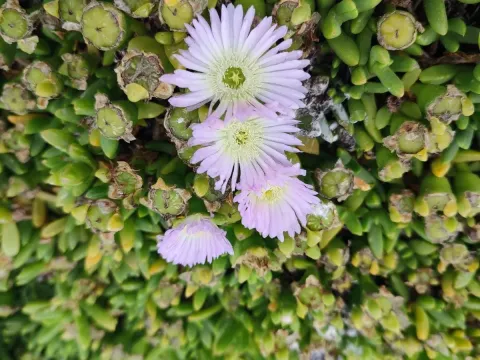
Disphyma
Disphyma N. E. Br.
Disphyma is primarily propagated through vegetative means, specifically stem cuttings, which ensures the consistency of the cultivar's traits and faster establishment.
What the section contains

Disphyma
The optimal window for taking cuttings is late spring to early summer, when the plant is in its active growth phase and temperatures are consistently warm.
Cuttings should be placed in a well-draining, sandy medium; they require very little moisture to initiate rooting and should be kept in a bright, sheltered spot.
Seed propagation is also possible but is significantly slower; seeds should be surface-sown on a moist substrate and kept at around 20–22 °C until germination occurs.
When transplanting into the landscape, ensure each plant has sufficient space to spread, as Disphyma forms dense, creeping mats that can cover significant areas.
Belonging to the Aizoaceae family, Disphyma is a classic succulent that thrives in environments with high light intensity and minimal water availability.
The plant requires full sun exposure to maintain its compact form and vibrant flower production; lack of light will result in etiolated, weak stems.
Soil requirements are minimal regarding fertility, but the substrate must be highly permeable. Poor drainage is the most common cause of failure in Disphyma cultivation.
Watering should be kept to a minimum, following the soak-and-dry method, ensuring the soil is completely dry before adding any further moisture.
Disphyma is not frost-hardy and should be protected or moved indoors if the temperature drops significantly below 5 °C.
The productivity of Disphyma is measured by its success as a ground cover plant or its efficiency in producing vegetative material for nursery propagation.
Under ideal growing conditions, a single well-established plant can cover approximately 0.5 square meters within a single season, acting as a living mulch.
In ornamental horticulture, the primary metric of yield is the intensity and duration of flowering, which is directly influenced by sunlight and potassium levels.
Nursery production efficiency is high, as a single mother plant can provide numerous stem cuttings per season with very low fertilizer requirements.
As a landscape solution, its high vegetative output helps in soil stabilization, effectively preventing erosion on slopes and sandy embankments.
The most significant threat to Disphyma is excessive humidity and waterlogged soil, which trigger fungal infections and rapid root rot.
Pest issues often arise in indoor or greenhouse environments, with mealybugs and spider mites being the most common problematic organisms.
- Mealybugs: tend to congregate in the leaf axils.
- Spider mites: thrive in hot, dry conditions and suck sap from the foliage.
- Root rot: the primary consequence of poor soil drainage.
Preventative measures include maintaining adequate airflow, keeping the foliage dry, and ensuring the root zone has excellent aeration.
If chemical treatments are necessary, low-concentration insecticidal soaps are preferred to avoid damaging the succulent leaf tissues.