
Drosanthemum hispidum
Drosanthemum hispidum
Description
Sowing dates
Propagation of Drosanthemum hispidum is best achieved through seeds or cuttings during the spring season. Seeds should be sown in a light, sandy substrate, ensuring they are placed on the surface rather than buried deep.
For successful germination, it is necessary to maintain a temperature range of 20-22 degrees Celsius and high light intensity. Seedlings emerge gradually, so it is crucial to avoid soil saturation, which can trigger fungal infections.
Cuttings are considered a more reliable method for preserving the cultivar's specific characteristics. Cut stems should be dried for a few days before planting to prevent rotting of the cutting surface when in contact with moist soil.
Transplanting young plants into open ground is carried out only after the risk of frost has passed. Select locations with minimal shading throughout the day to ensure optimal root establishment.
Choosing the correct planting time is critical, as the crop is extremely sensitive to excess moisture combined with low temperatures. Late May, when the soil has warmed sufficiently, is the most suitable time.
Growing requirements
Drosanthemum hispidum belongs to the Aizoaceae family and is a typical succulent that requires specific environmental conditions. Originating from South Africa, the plant is characterized by high drought tolerance and a preference for direct sunlight.
The plant thrives in poor, well-draining sandy or rocky soils with a neutral to slightly alkaline pH. Stagnant moisture in the root zone is detrimental to this species, making a drainage layer essential during planting.
In temperate climates, Drosanthemum is typically grown as an annual or a container plant. It does not tolerate freezing temperatures well and requires protection or relocation to a greenhouse if temperatures drop below five degrees Celsius.
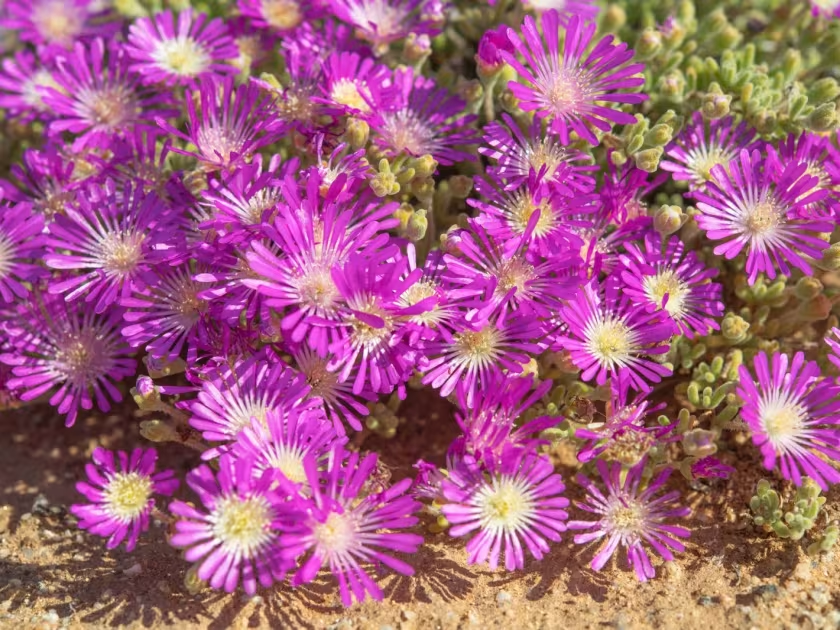
Botanically, it is a trailing subshrub with woody stems and fleshy, papillae-covered leaves. A hallmark feature is its profuse flowering, which transforms the plant into a vibrant carpet at the peak of the growing season.
For active growth, the plant requires minimal fertilization. Excess nitrogenous fertilizers lead to a loss of compact shape and reduced flowering intensity, so it is recommended to use specialized succulent fertilizers.
Main diseases and pests
The primary danger to Drosanthemum is improper irrigation, which leads to the rotting of the root system and stems. High humidity in both air and soil is the main provocateur of root rot.
Among pests, mealybugs and spider mites are the most common. These insects damage the fleshy leaves by sucking sap, which significantly weakens the plant and diminishes its ornamental appeal.
When dealing with pests, systemic insecticides are recommended, although care must be taken to ensure chemicals do not accumulate in plant tissues. Biological agents may be used during the initial stages of infestation.
Fungal diseases, such as gray mold, may develop in dense plantings with poor ventilation. Ensuring adequate airflow and maintaining proper spacing during planting are the best methods of prevention.
Regular monitoring of the plant's health allows for early detection of issues. Upon observing the first signs of wilting or leaf deformation, one should immediately isolate the affected plant or perform sanitary pruning.