
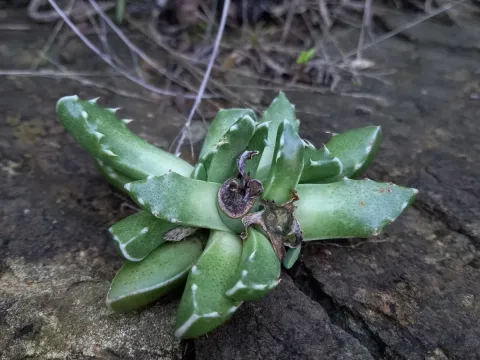
Faucaria
Faucaria
Faucaria seeds should be sown in early spring, ideally between March and April, to ensure the seedlings benefit from the lengthening daylight hours. An ambient temperature of +20°C to +25°C is critical for germination.
What the section contains


Faucaria
A well-draining, sandy-based sterile substrate is essential for sowing. Seeds are placed on the surface and lightly pressed, maintaining moisture through a transparent cover until germination occurs.
Seedlings are quite delicate and require consistent air circulation once they emerge. Overwatering at this stage will lead to rapid decay, so using a fine mist spray is the safest method for hydration.
Pricking out the young plants is a slow process; wait until the succulents have developed at least two or three sets of true leaves to ensure they have enough root mass for successful relocation.
Alternatively, vegetative propagation is highly effective for mature Faucaria plants. Simply separate the offsets during repotting and plant them in individual small pots to allow them to establish independently.
Faucaria belongs to the Aizoaceae family and is native to the arid regions of South Africa. It is well-known for its thick, succulent leaves that often feature sharp, tooth-like margins, giving it a distinct appearance.
To flourish, this plant requires intense sunlight. It thrives best in bright, direct light, which helps maintain its compact shape and promotes the development of its unique leaf textures and patterns.
The potting medium must be porous and inorganic. A mixture of cactus soil amended with additional perlite or pumice provides the necessary drainage to prevent the root system from sitting in stagnant moisture.
Watering should be managed strictly according to the seasons. During the active growth phase, water only when the substrate is completely dry. In winter, the plant enters dormancy and requires minimal to no water.
Proper aeration is vital for the health of Faucaria. Keeping the environment well-ventilated prevents the buildup of humidity, which can otherwise lead to physiological stress and potential rot.
Root rot is the most significant threat to the plant's survival, usually caused by overwatering or poor drainage. Once roots begin to decay, the plant often cannot be saved, making prevention the best strategy.
Mealybugs are common pests that tend to hide in the tight spaces between the succulent leaves. These can be treated with systemic insecticides or removed manually with cotton swabs soaked in rubbing alcohol.
Spider mites may infest the plant if the air in the room is consistently hot and dry. These pests thrive in stagnant air, so keeping the plant area clean and refreshed is an important preventative measure.
Fungal infections can develop in high-humidity areas, especially if water is allowed to pool in the rosette center. Always pour water directly onto the soil, avoiding contact with the foliage whenever possible.
Stunted growth or loss of foliage color is usually an indicator of incorrect light or temperature. Periodic inspections will help ensure the plant remains free of pests and health issues.