
Drosanthemum candens
Drosanthemum candens
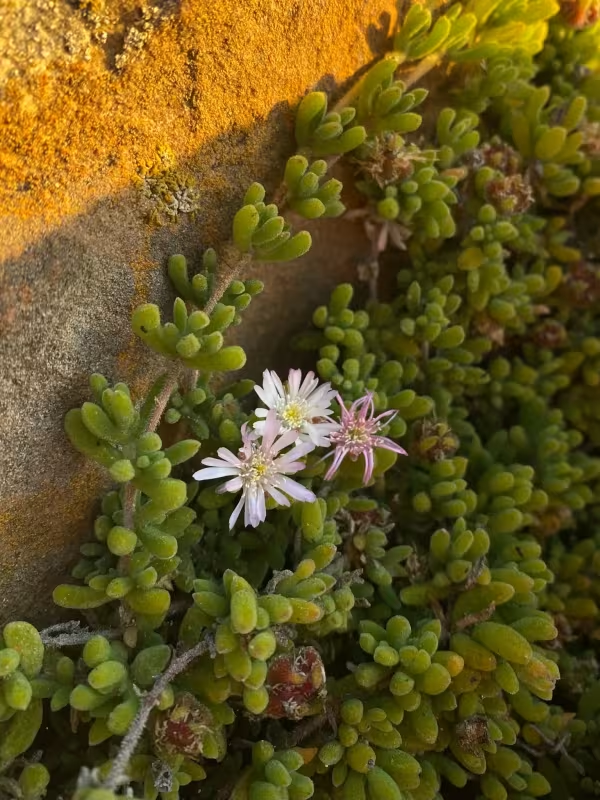
Description
Growing requirements
Drosanthemum candens belongs to the Aizoaceae family, commonly known as the ice plant family. It is a succulent species native to South Africa, adapted to thrive in harsh, arid environments with high solar radiation.
The plant requires well-drained, sandy, or rocky soil to prevent water accumulation at the roots. It is extremely intolerant of waterlogged conditions, which can lead to rapid decay of the succulent root system.
Optimal growth is achieved under full sun exposure. In shaded environments, the plant tends to become leggy, losing its characteristic dense growth habit and significantly reducing its floral output.
It possesses a remarkable ability to store water within its leaves, making it highly drought-resistant. This physiological adaptation allows the species to survive long periods of water scarcity in its natural habitat.
In cultivation, temperature management is crucial as the species has limited frost tolerance. Therefore, it is often grown in containers in colder regions to allow for protection during winter months.
Main diseases and pests
The primary threats to the health of Drosanthemum candens are various types of root and stem rot. These conditions are almost always caused by excessive soil moisture or high humidity combined with poor ventilation.
Mealybugs are a major pest concern for this species. These insects hide in the tight clusters of fleshy leaves and stems, sucking the sap and weakening the plant's overall vitality.
Spider mites can also become problematic, particularly in greenhouses or indoor settings where the air is consistently dry, necessitating regular monitoring of the foliage for fine webbing.
Sanitation practices, such as removing fallen leaves and ensuring adequate airflow, are essential to prevent the spread of fungal pathogens that thrive in stagnant, humid environments.
Integrated pest management, including the use of systemic insecticides or contact miticides, should be applied strategically to protect the plants while minimizing chemical damage to the delicate succulent tissues.