
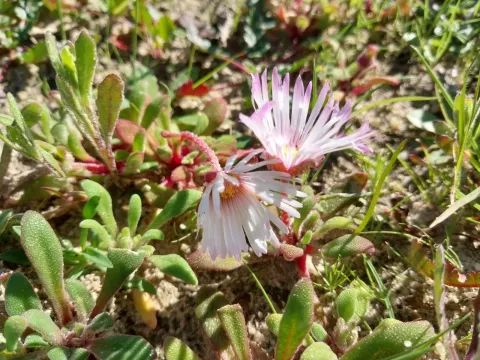
Dorotheanthus
Cleretum
Dorotheanthus (Cleretum) belongs to the Aizoaceae family. It is a succulent ground cover plant that requires precise planting timing for optimal blooming.
What the section contains


Dorotheanthus
Seeds are sown for seedlings in March or April using a light, sandy substrate. It is essential to ensure good drainage to prevent water stagnation during the germination period.
Young plants are transplanted into open ground only after the threat of night frost has passed. Typically, this period falls in late May or early June when the soil is sufficiently warmed.
In regions with warmer climates, direct sowing is possible in May, once stable warm weather is established. Seed covering depth should be minimal, as they require light to germinate effectively.
Planting density depends on the landscape design goals: for carpet-like flower beds, keep a spacing of approximately 15–20 centimeters between individual plants.
This crop is a classic light-loving succulent that requires maximum sunlight exposure throughout the day. In shaded conditions, the stems become elongated, and flowering becomes sparse or stops completely.
Dorotheanthus requires soil with excellent water and air permeability. Ideally, it prefers nutrient-poor, sandy, or rocky soils with a neutral or slightly acidic pH level.
The plant is highly sensitive to excessive soil moisture. Regular watering is only necessary during the first few weeks after transplanting; subsequently, the crop shows high drought tolerance.
Fertilizer application should be moderate. Excess nitrogen leads to excessive vegetative growth at the expense of bright and abundant flowering, so use complex fertilizers intended for succulents.
Proper air circulation is crucial for successful development. Stagnant, humid air can lead to rot in leaf plates and stems, which is destructive for this species.
The main threat to this crop is overwatering, which triggers the development of root and stem rot. Upon noticing the first symptoms, reduce watering and treat the soil with fungicides.
Among insect pests, aphids and mealybugs are the most common occurrences. They feed on the sap of young shoots, significantly weakening the plant's natural immune system.
Systemic insecticides are used to control aphid infestations. It is important to apply treatments during dry weather, avoiding direct contact of chemicals with the flower heads.
Nematodes can also attack the root system, especially in greenhouse conditions or when crop rotation practices are neglected. Prevention involves soil disinfection and choosing healthy planting material.
Slugs and snails can cause damage to the succulent leaves by feeding on their tissues. Recommended controls include barrier methods or specialized granulated bait placed around the flower beds.