
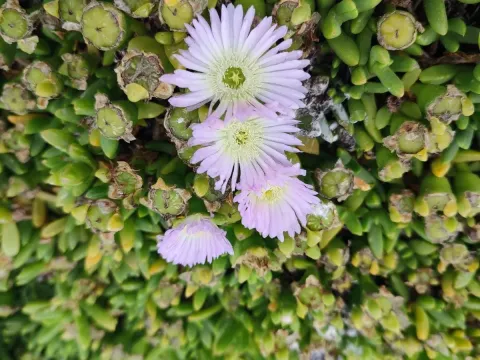
Disphyma
Disphyma
Disphyma is a genus of perennial succulent plants belonging to the family Aizoaceae, native to coastal and arid regions of South Africa and parts of Australia.
What the section contains

Disphyma
Botanically, it is characterized by succulent, fleshy leaves that often feature crystalline papillae, which are specialized cells used to store water and minerals.
The cultivation of this plant requires well-drained, sandy, or rocky soil profiles, as the species is highly sensitive to root asphyxiation caused by excessive water retention.
As a sun-loving plant, Disphyma thrives in full exposure to solar radiation, which is critical for maintaining its dense habit and stimulating vibrant flower production.
It is exceptionally tolerant of saline conditions, making it an excellent candidate for coastal landscaping where standard ornamental species fail due to salt spray.
The most significant threat to Disphyma health is soil saturation, which leads to rapid root decay and the development of various fungal pathogens.
Mealybugs are the primary insect pests affecting this crop; they hide in the leaf junctions and feed on the sap, causing growth stuntedness and yellowing.
Fungal infections, such as powdery mildew, may occur if the plants are situated in areas with high humidity and insufficient air movement.
Slugs and snails are major external threats that can rapidly consume the succulent leaves, particularly during the humid spring and autumn seasons.
- Monitor for root rot symptoms regularly.
- Apply systemic insecticides only if infestations are severe.
- Ensure proper spacing to increase air circulation.