
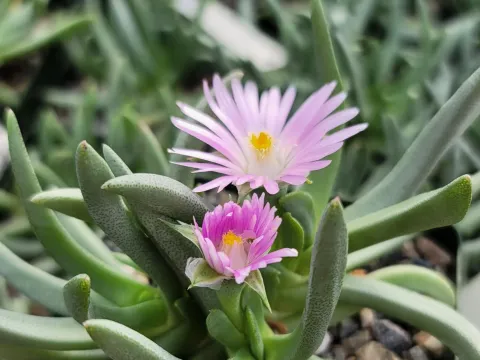
Ebracteola
Ebracteola
Ebracteola is a genus of succulent plants belonging to the family Aizoaceae. These plants are native to the arid regions of Southern Africa, specifically Namibia and South Africa, where they have evolved to thrive in harsh, rocky desert environments.
What the section contains


Ebracteola
The botanical characteristics of Ebracteola include small, succulent leaves designed to store water and minimize transpiration. They typically grow in low-lying clusters, which helps protect the base of the plant from direct heat and maintain internal moisture reserves during droughts.
Regarding soil requirements, these plants necessitate highly porous and well-draining substrates. An ideal mix usually consists of coarse sand, perlite, and small gravel, ensuring that moisture does not accumulate around the roots and preventing root rot.
Climate needs involve high levels of solar radiation and low relative humidity, which are essential for maintaining the compact growth pattern characteristic of the genus. In cultivation, protecting them from excessive moisture during cooler months is mandatory for survival.
The primary horticultural use of Ebracteola is as an ornamental plant for specialized succulent collections. Due to their unique appearance and relatively slow growth rate, they are highly regarded by hobbyists who appreciate the aesthetics of xerophytic desert flora.
The primary threat to the health of Ebracteola is root rot caused by improper watering techniques or heavy, water-retaining soils. Once the root system is compromised, the decay can quickly spread to the leaf tissue, often leading to irreversible damage.
Pest management focuses primarily on controlling mealybugs and root aphids. Regular inspection of the root zone and the leaf axils is necessary to prevent infestations that can stunt growth or result in the complete collapse of the plant.