
Climbing Dalbergia
Dalbergia volubilis
Description
Growing requirements
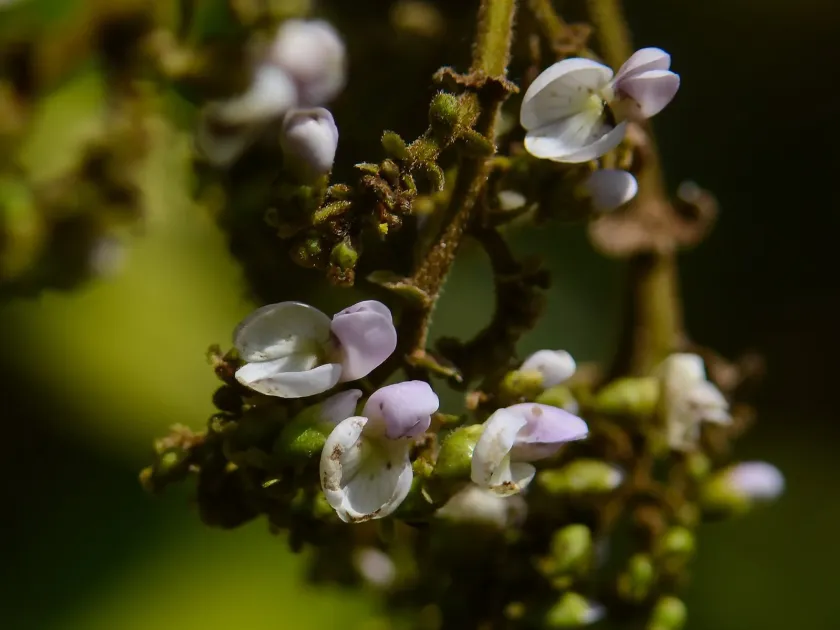
Climbing Dalbergia (Dalbergia volubilis) is a significant woody climber within the Fabaceae family. This perennial plant is recognized for its thick, climbing stems that allow it to reach the canopy layer in its native tropical habitats.
The species is primarily native to the Indian subcontinent and parts of Southeast Asia. It thrives in tropical climates characterized by warm temperatures and high relative humidity throughout the year, requiring distinct growth cycles.
To cultivate this species effectively, one must provide well-drained soil rich in organic matter. Sandy-loam soils are ideal, as they prevent waterlogging while maintaining the necessary moisture for the plant's robust root system.
Environmental requirements include a frost-free climate with consistent rainfall. Exposure to bright, indirect sunlight is preferable for mature specimens, though they can adapt to varying light intensities during the juvenile stage.
Maintenance of the crop involves providing sturdy trellises or natural support structures. Without vertical support, the plant's growth is stunted, and it fails to produce the profuse inflorescences characteristic of the mature species.
Harvesting
The agricultural and economic utility of Dalbergia volubilis is centered on its medicinal properties. Various parts of the plant are utilized in phytotherapy to treat conditions ranging from inflammation to digestive disorders.
The leaves, bark, and roots of this climber serve as a source of phytochemicals such as flavonoids and isoflavones. These compounds have garnered attention in global research for their potential therapeutic applications in modern drug development.
In addition to medicinal uses, the fibrous nature of the stems makes them useful in rural craft production. They are sometimes employed to weave baskets and mats, showcasing the traditional utility of this woody legume.
Harvesting strategies prioritize the preservation of plant health. Sustainable extraction methods are employed to ensure that the vine can regenerate its biomass after the seasonal harvesting of leaves and branches.
Post-harvest management involves meticulous drying and processing of the herbal material. This stage is critical to prevent moisture-induced degradation of the secondary metabolites that provide the plant's unique properties.